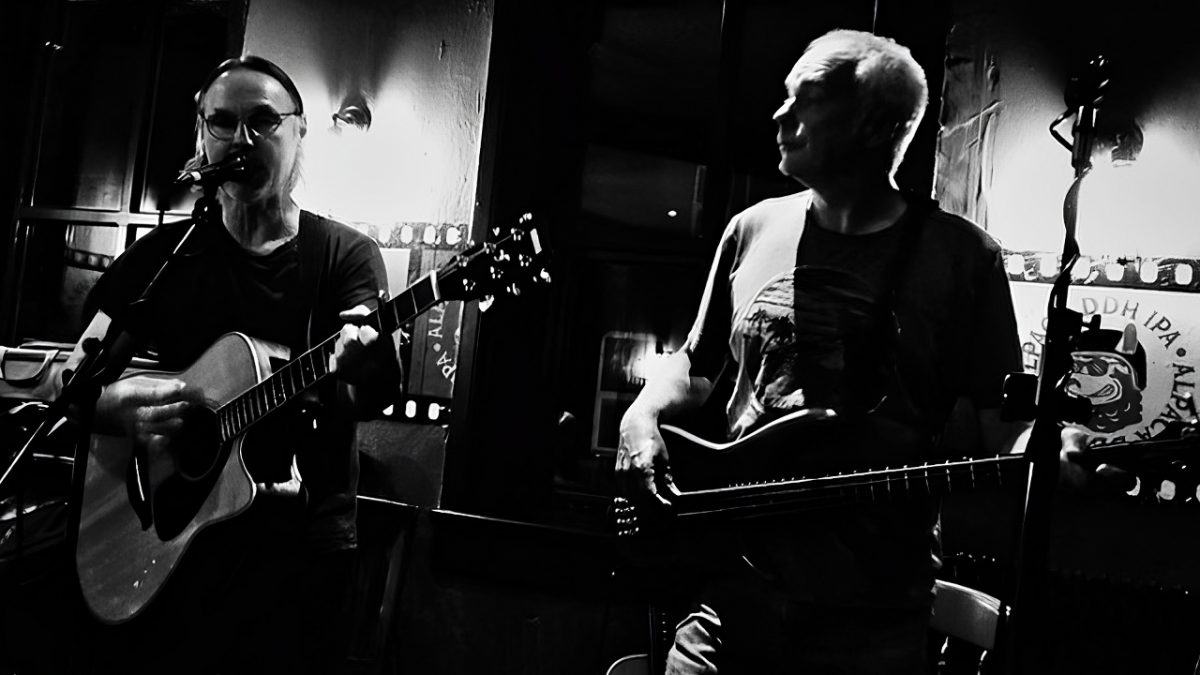
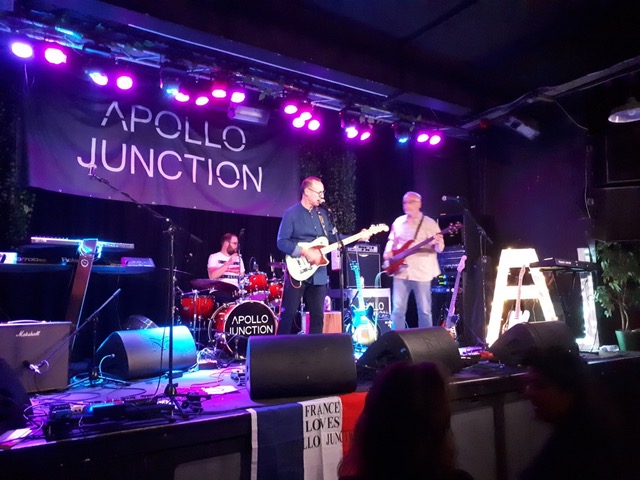
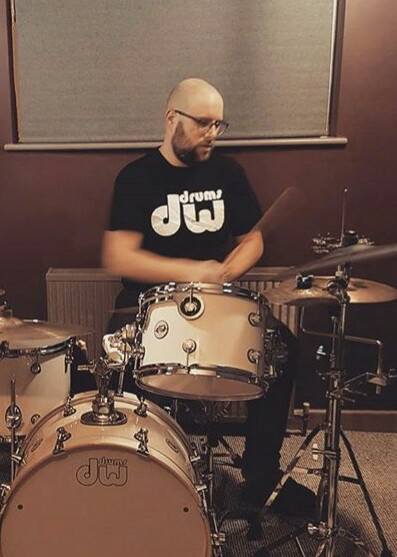
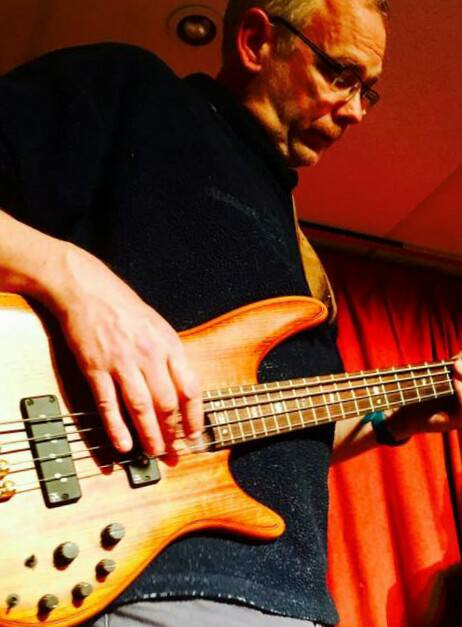
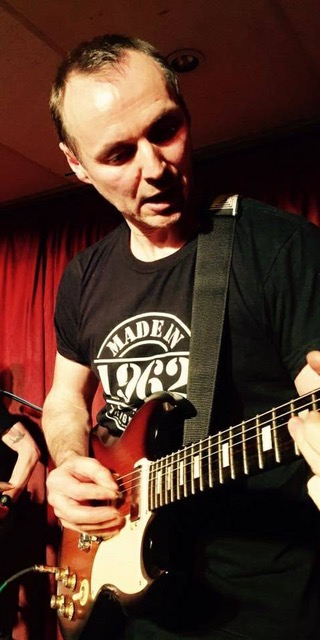
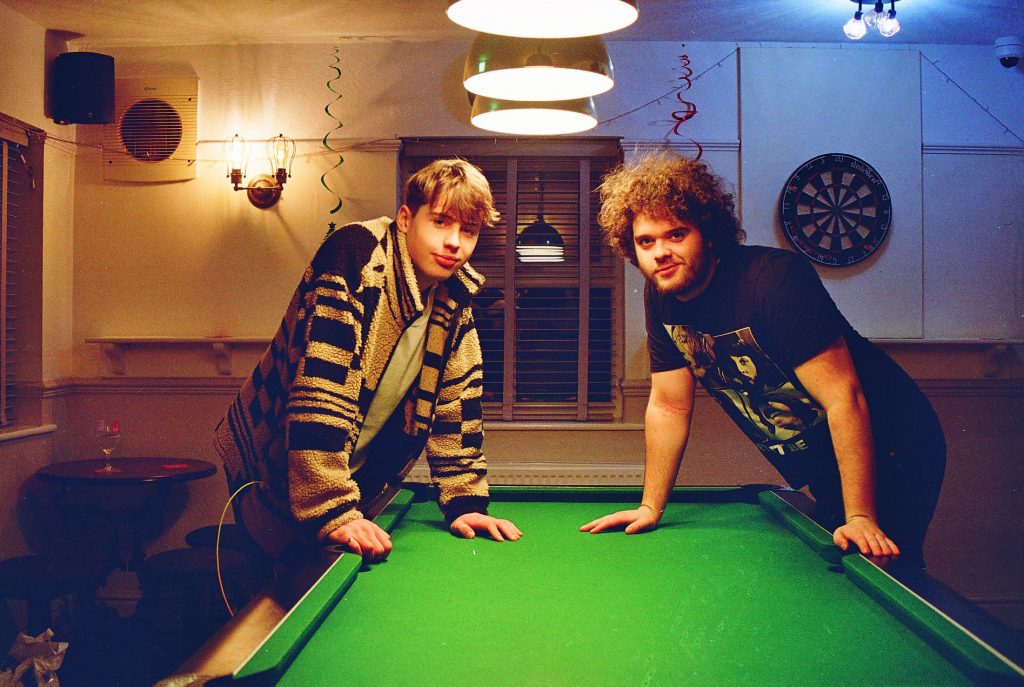
Originating from Holmfirth, Yorkshire, The Laikers are an upbeat indie-pop band renowned for their lively performances and distinctive sound. They not only play great covers but also write their own music that really shows who they are as a band. Their new track, “Faker,” focuses on the idea of being let down by celebrities who pretend to be something they’re not. It’s a song about betrayal, disappointment, and trying to figure out who you can actually trust.
The track leans into an indie-rock style, built around a strong, catchy guitar riff and powerful vocals that give the song a real sense of impact. The energetic drums and clear production help the track feel bold and direct, matching the message of the lyrics. Overall, “Faker” shows how The Laikers can mix meaningful themes with a punchy, enjoyable sound that sticks with you.
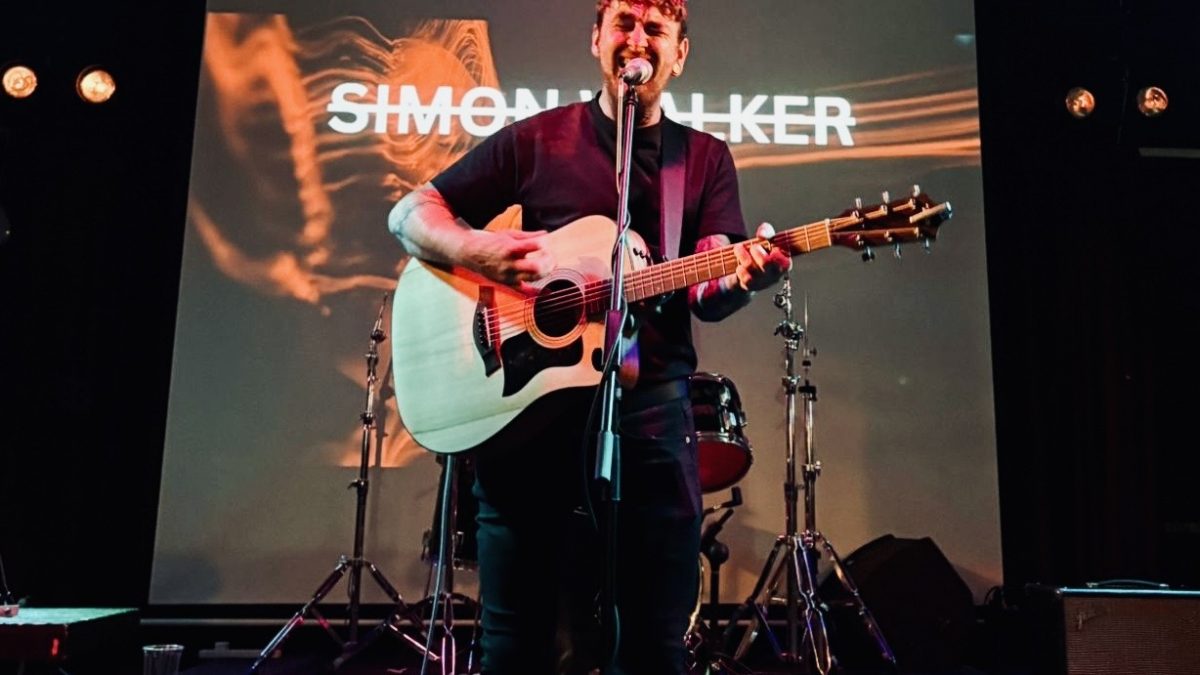
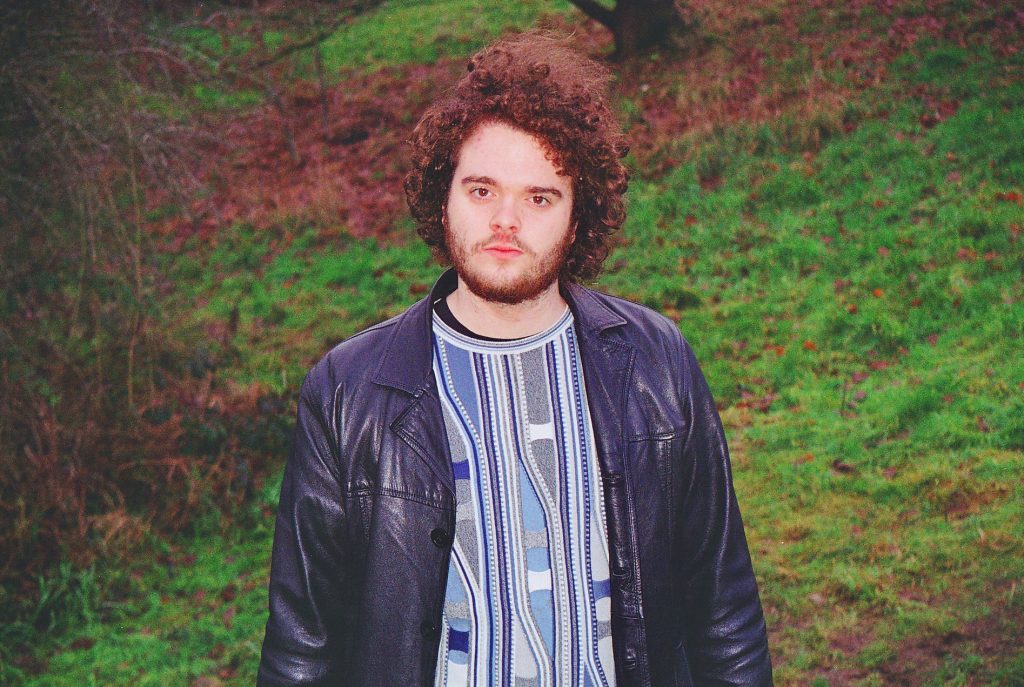
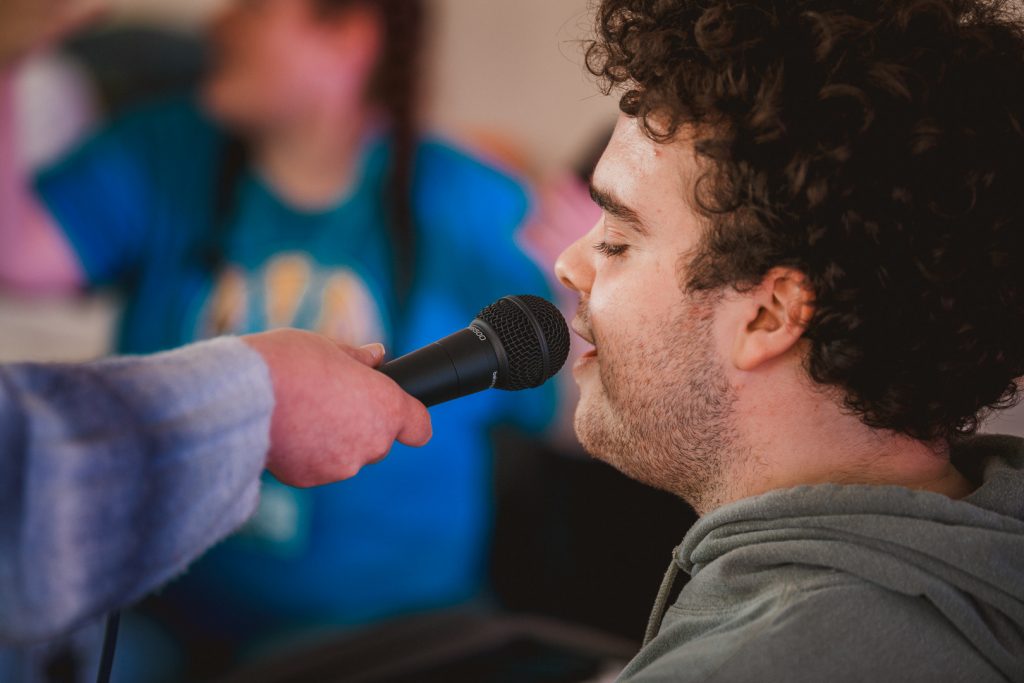
After gigging up and down the country, Simon Walker eventually caught the attention of major artist Yungblud, earning himself a coveted spot at the UK festival Bludfest. This breakthrough marks a significant moment in Walker’s growing career, bringing his music to a much wider audience and cementing his reputation as an emerging talent to watch. With a track as striking as In Your Eyes, it’s no surprise he’s stepped into the spotlight.
The song carries an uplifting, inspirational message, encouraging listeners to embrace who they are without apology. Walker reminds his audience that individuality is something to celebrate and that choosing to be different is a strength rather than something to hide. Rooted in the indie-pop genre, the bright, melodic production and shimmering instrumentation perfectly complement the track’s hopeful spirit.
The standout lyric “be who you want to be” reflects Walker’s dedication to creating music that spreads positivity and reassurance. His ability to blend meaningful themes with catchy, accessible songwriting allows In Your Eyes to resonate deeply with listeners, offering both comfort and motivation. It’s this combination of authenticity, emotional honesty, and musical charm that continues to fuel his rise in the UK music scene.
How did you get into making music? – What started it all for you?
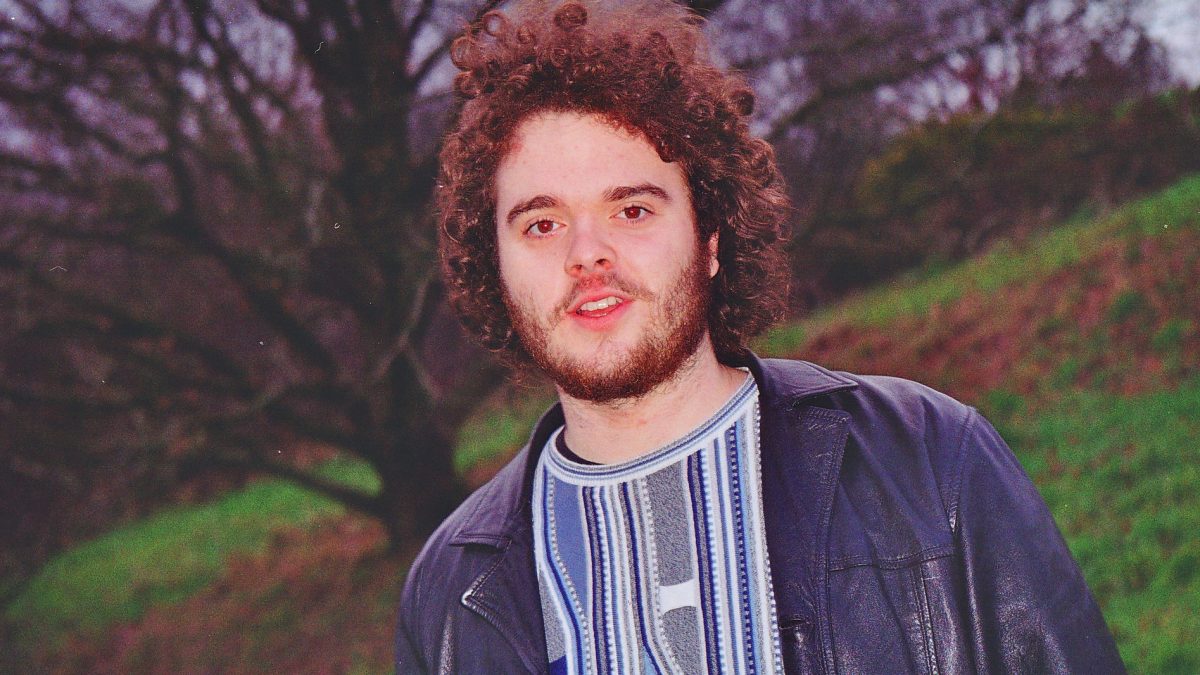
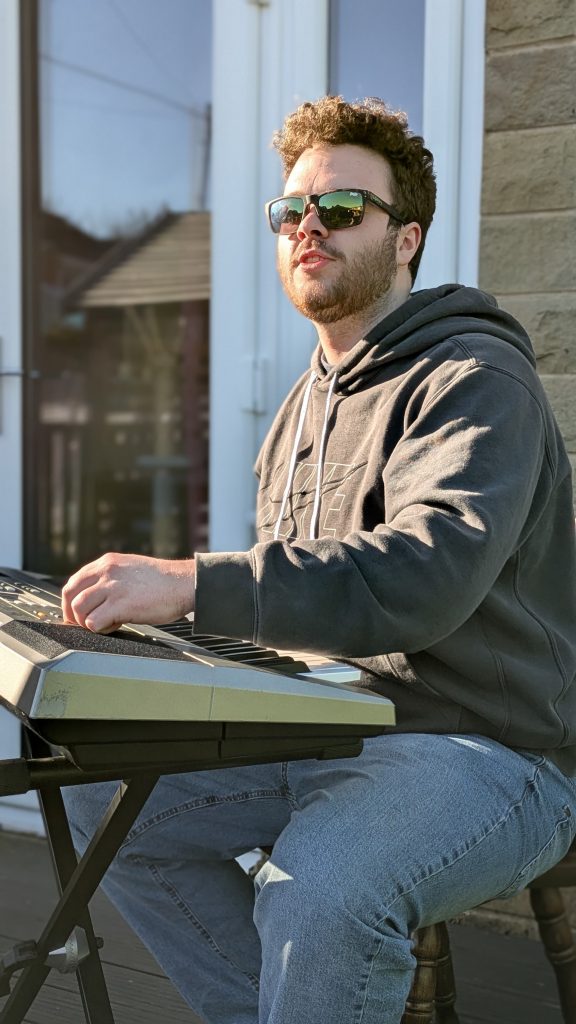
I naturally learnt to play drums when I was in year 7, and that just developed. When I was about 12/13, I massively got into the Beatles. I had a few downloaded songs on my old phone, such as Hey Jude and the No.1 album. When I was 14 (2017), my dad had an old Casio digital piano and an old Beatles songbook, which had the music of the Beatles in it. I remember trying to play Hey Jude and individually studying the notes with my dad just to get the first “hey Jude” and the F chord. For the amount of work it took, it wasn’t worth it. For weeks after, I kept playing little bits of notes and coming up with tunes and melodies. Weeks turned into months, and months turned into years. I never had any piano lessons, as I couldn’t afford them and learning to read music when I had already taught myself my own way just didn’t sit right with me. Eventually, these melodies I came up with developed into more complex note patterns, which were basically chords. I then remember googling the notes of C major and minor, etc., as I did music GCSE, I wasn’t completely unaware of this. I realised that a C major chord is the same as all other major chords and minor chords, whichever note they are. What I’d do is study how many notes are between each played note there are and apply it to any note on the keyboard. Eventually, I learned all chords, and then around 2019, I started to get better at writing tunes. Ever since, I have written full-blown songs and just kept practising and perfecting them constantly. Just having a pure love and a near-obsession with music made me constantly play and sing stuff which became songs.
What does your songwriting process look like?
I pretty much always start with the music. This involves just playing random chord patterns on the piano, which is usually GarageBand on my iPhone when I’m out and about, and on my piano at home and sometimes on my guitar, which I also taught myself. This involves playing chords and just whistling tunes; it’s all subconscious. I just whistle whatever comes out; I never really think about it, just whatever comes naturally to me. A lot of the time, instead of whistling, I’ll just sing random lyrics, and if I like them or they stick, I’ll keep them. Lyrics have never been my strong point, and so they sometimes require more conscious work. To be honest, playing my keyboard is also slightly subconscious; I sort of just think, “What will happen if I play this and then go there after?” Whenever I write a song, it’s all experimental- it’s just trying stuff out, just hearing and feeling how it sounds and if I like it. The whole process of writing music for me is a feeling. If it feels good and sounds good, it’s good. I do have a reasonably good self-taught understanding of music theory, but I never think “I need to follow it”. Just like, for example, how Card Factory starts in F major and modulates to G major for the “Card Factory” lyric and the rest of the song, almost adding excitement to being in a card shop. I think you do need an understanding of music theory and how keys relate to each other though, or else songs can just be bland. If a painter wants to be truly creative, they need to have a very full palette of colours. It’s the same way, I believe you do need a musical understanding because it does help you write. After crafting the music, which is the chords and melody and sometimes lyrics, I’ll then tweak and adjust, change and usually need to add more lyrics.
Who are your main influences?
I was brought up on The Beatles from both sides of my family, and I have a fond memory of my grandad and me singing along to them. They got me into playing the piano and guitar, and music in general was fully opened up to me because of the Beatles. After that, I massively got into the Beach Boys (mainly Brian Wilson) and the Pet Sounds album, which boosted my songwriting inspiration from coming up with some cool tunes on the piano to writing and producing proper songs. My dad has always been into Mozart, and only in the last year or so have I actually become massively into Mozart’s music. Another massive influence is Mac DeMarco, who I discovered in 2020 and whom I recently saw in one of his concerts in Manchester.
How would you describe your song ‘Card Factory?
I was in Card Factory around August 2024 with my girlfriend Kate. We were in there for a good 15 minutes while she was looking for a card for someone, and I got my GarageBand keyboard out on my phone and just started playing chords and singing as I was getting bored. The lyrics and chords and tune literally came all at once. I hadn’t even thought about it. I just started playing and singing, and the whole song came out straight away. At first, I was laughing at the spontaneity of it and playing it to Kate, who was getting embarrassed about me singing a cheesy song about the Card factory while in the card factory next to her. It was a very funny and fun experience. When I later recorded and produced the song at home, I hadn’t really changed anything; it was basically a copy of what I had just come up with while out and about in the card factory. It’s not really about anything apart from literally being in a card shop. It’s a very laid-back and obviously un-serious track.
Is there an album in the making that we can look forward to? If so, what’s the vibe?
I spend most of my time working on projects with my songwriting ‘partner’ and best mate, Jack. Our duo is called ValleyBoy and is totally separate from my own solo work. We’ve finished an EP that will be out soon, with proper artwork called ‘This Little Town’. It’s a very serious piece of work and at the moment is my main focus. It’s set around the decline of Northern towns and industry and is quite political and socially focused. I don’t know what you’d call the genre though. I’d link it in a category similar to what Pink Floyd, Bowie, and slightly, the Beatles are in, maybe? I’m not sure, though. We’re also looking for band members to join ValleyBoy who can play with us live, as we haven’t even done any gigs yet or anything aside from a few open mics at Northern Quarter. Aside from this, I do continue to write my own solo work as well and may potentially be releasing an album of mostly done material, but it probs won’t be for ages. I don’t know when the time is right, even though it’s basically almost done.
What’s next for you?
My girlfriend Kate has nearly finished a lovely and extremely creative animated music video for Card Factory, which she has drawn and used stop motion for. We just need to finish the last few seconds of it, so that should be out very soon. I hope also to soon be performing with a full band for ValleyBoy and have the EP released, and hopefully it’s well-received and known about. I will also keep releasing stuff under my own name.
What was it like to be a student studying music whilst also trying to get your name out there in the industry? – How has studying music affected your musical understanding?
From when I studied music in college, I found my coursework was a great way to motivate myself to build my skills in both performance and production. However, coursework was extremely overwhelming, and I struggled to find the time to work on my solo project whilst also working hard for my grades. I wouldn’t change my choice to have studied music, though, because it’s helped me to raise my understanding of composition, the art of performance and has helped me gain a lot of musical connections.
What got you into making music and specifically folk music?
I’ve loved music from a very young age: I have memories of dancing around the room singing ‘Sabbath Bloody Sabbath’ with my dad from when I was two years old, to learning to play ‘Song from Bridget’ with my mum on the ukulele when I was around 7. Singing and performing mean the world to me, and if I could do it every day, I would. I’m not quite sure how I’ve ended up making folk music, as the majority of what I listen to is rock and pop with a lot of other genres in the mix. I’ve found folk to be the only music I’m able to write freely without thinking too much about it and how it’s going to work with other instruments; it’s just me and my guitar.
Who are your main musical influences?
My musical influences change a lot, but my main ones at the moment have got to be Sofia Isella, Ok Goodnight (specifically their vocalist Casey Lee Williams) and Seb Lowe. All create very different sounds, but all are absolutely incredible music.
Have you got anything in the works right now that we can expect soon?
I have a few pieces of work at the moment, but how soon we can expect them is a different question. I produce and record everything at home right now, and, with my limited knowledge and skill with production, I’m struggling to get anything finalised to a standard that I think is acceptable. With regards to producing at home, I find writing is the easier part, although it’s still pretty difficult. I’ve got several songs that haven’t seen the light of day because they’re incomplete or just aren’t up to my usual standards. Recording is fun but extremely hard work and I need a lot of motivation to manage to get any done; the actual recording part is fine but getting the best take and then all the editing afterwards as well as trying to compose extra instruments is so difficult and more days than not I just give up, leaving behind a project until I can come back to it with fresh ears.
What is the story behind your song ‘Love betrayed me’?
‘Love betrayed me’ is honestly quite funny, the more time that passes since I wrote it. I was in a very bad place and struggling with communication in my relationship at the time. I got it in my head and wrote this just a day after I thought everything had finally become clear, my anxiety overwhelming me and leaving me feeling like I couldn’t breathe right. This song became an expression of my anger and was almost like my voice of reason, trying to snap me out of the little delusions I’d trapped myself in. ‘Love betrayed me’ is a reality check up until the last chorus. A drastic change to the first two lines, flipping the song from a rational place of rage to one of hope and longing, almost childlike in a way: “Do you love me, do you love me not? Because I’m getting sick and tired of all these anxious thoughts.” Honestly, I could ramble on about the way I interpret my songs for hours, especially this one. I love getting to analyse writing and go over the potential meanings because a lot of the time, I still haven’t fully understood what I was writing about, or even better, the meaning of the song changes with time, and I get to look at it in lots of new ways.
What does performing your music mean to you?
Performing, in my experience, can be almost euphoric, especially if I’m feeling confident about my setlist. I’m usually extremely nervous and pessimistic before I go onstage, but once I’m there, I’m having such a great time getting to sing my heart out. Whether it’s covers or originals, in a band or on my own, I have so much fun performing, and I would love to get more opportunities to be able to do it much more frequently.
What’s next for you?
I have absolutely no idea what’s next for me. I’m trying to figure out everything all at once for both my personal and musical life. I hope that I’ll get to perform a lot more gigs, write hundreds of songs and release them (with good quality production of course), but I know I struggle to stay motivated and have been in a slump with anything musical for months now, but I’m hoping to bounce back soon. Ideally, I’ll be better than ever when that happens.
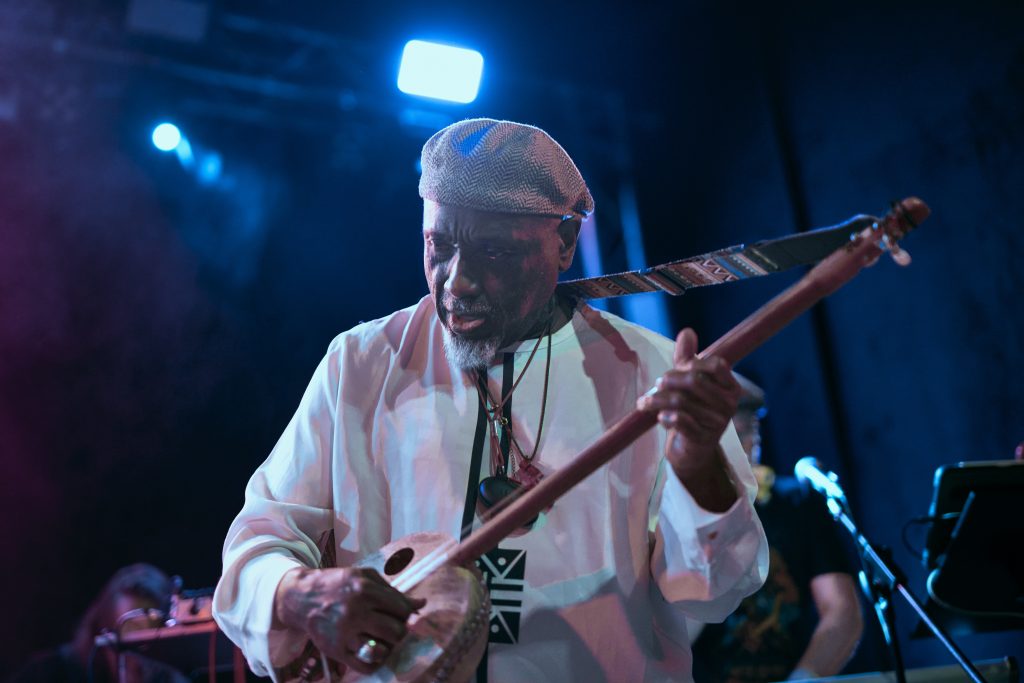
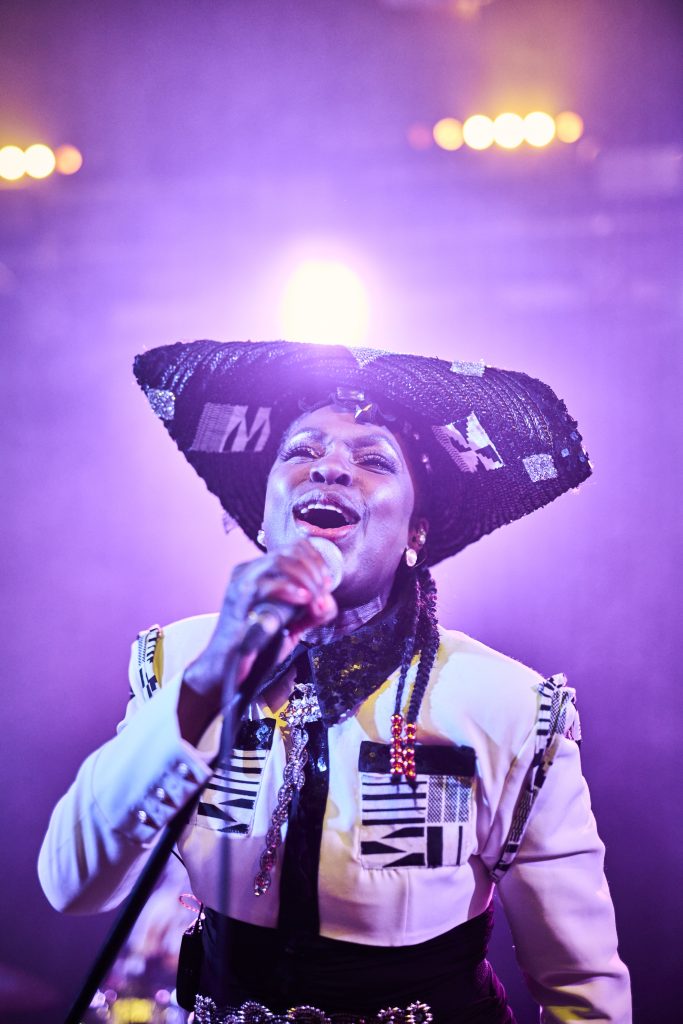
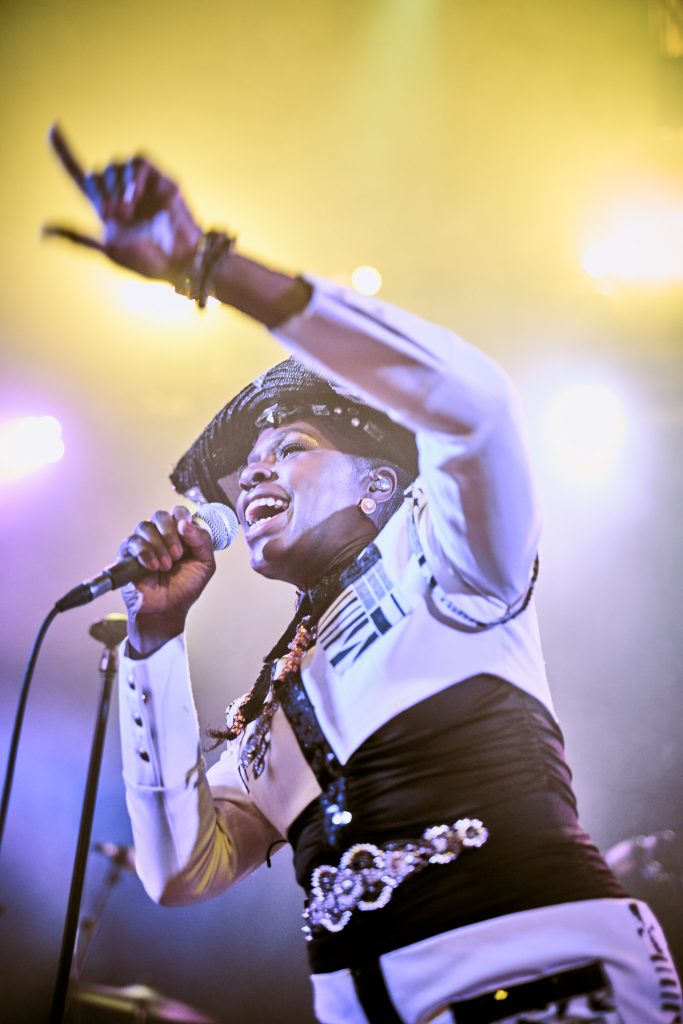
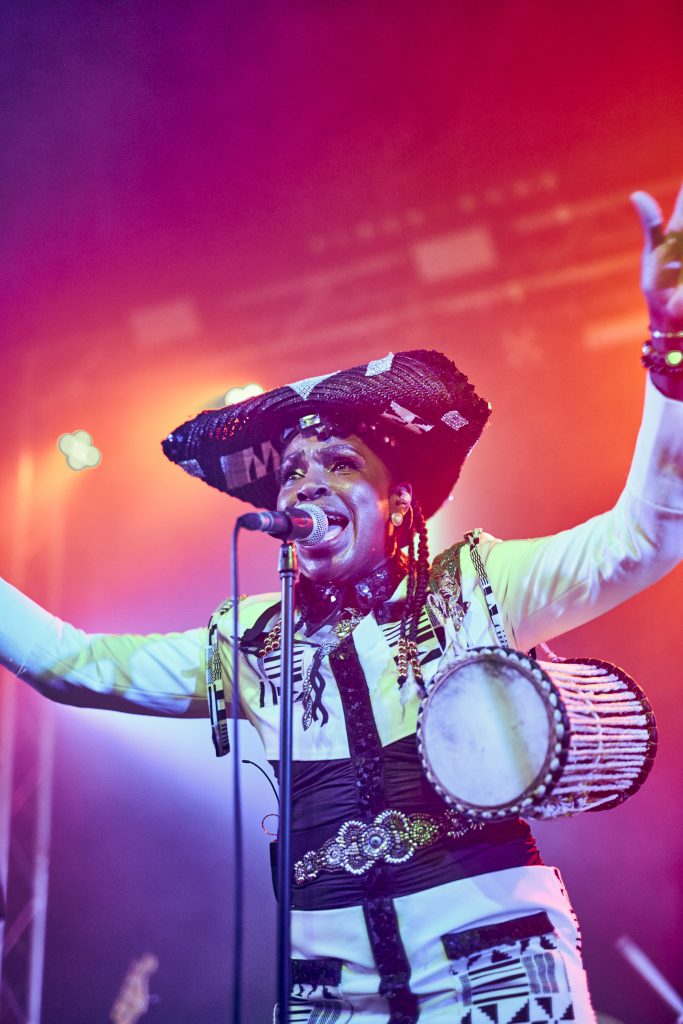
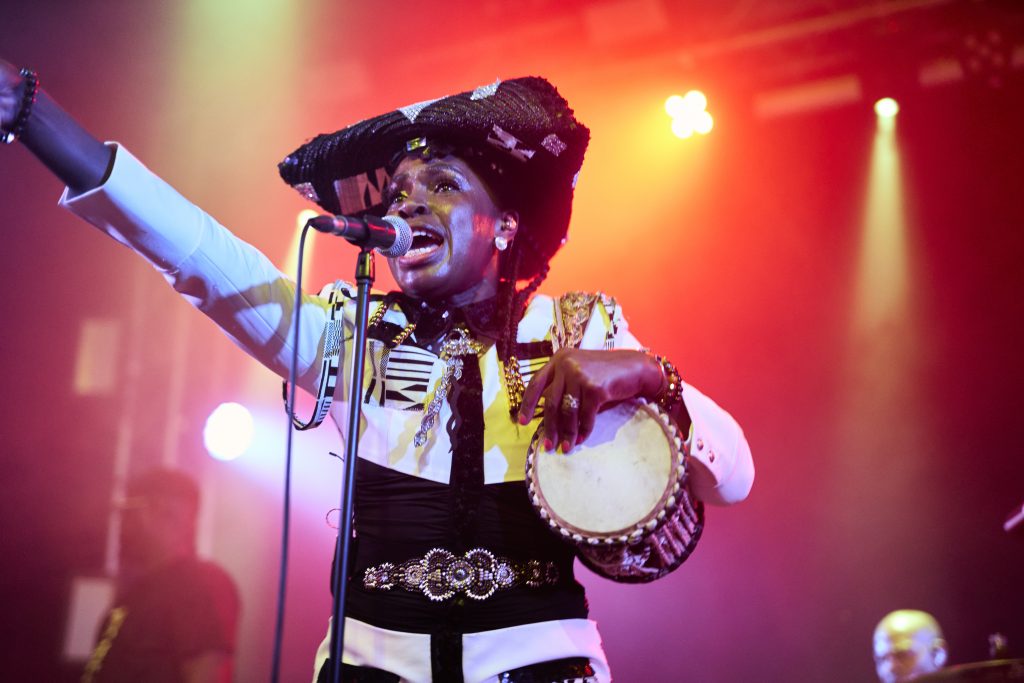
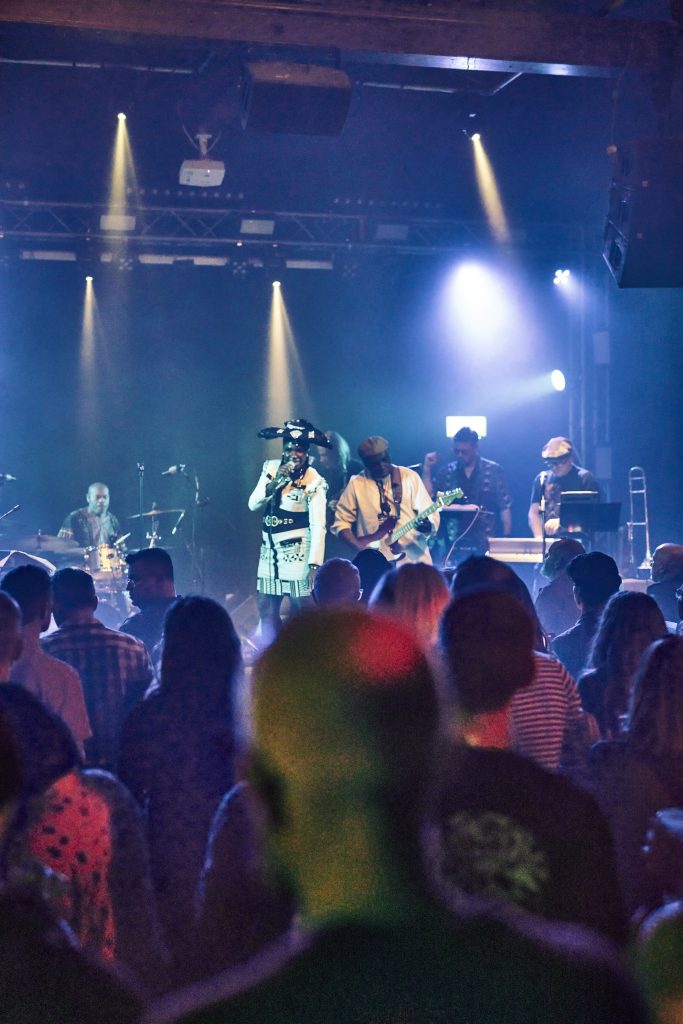
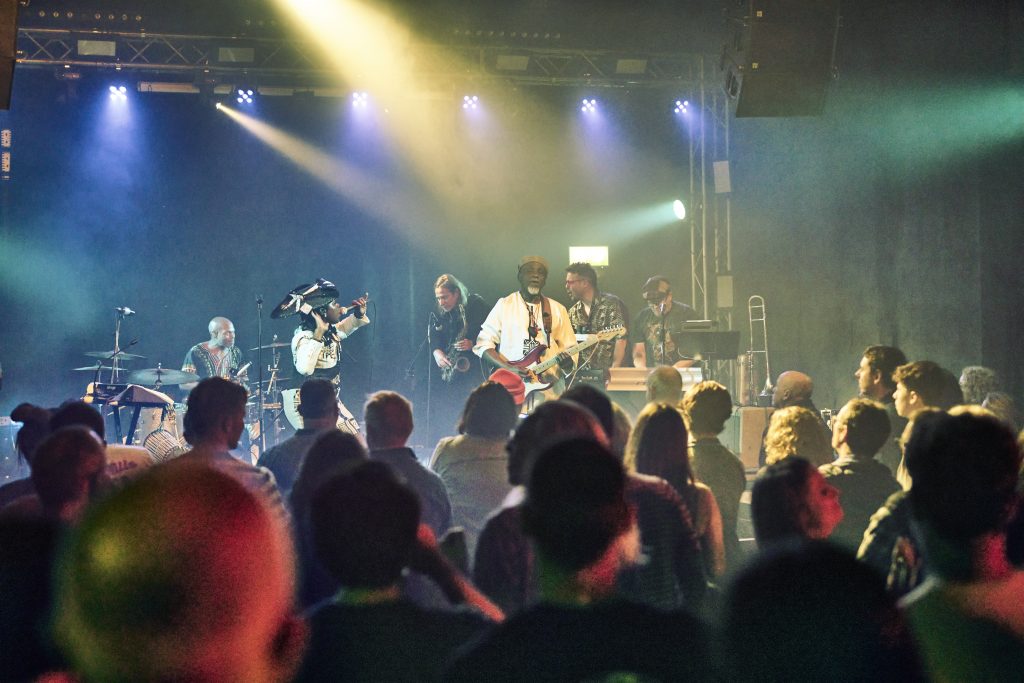
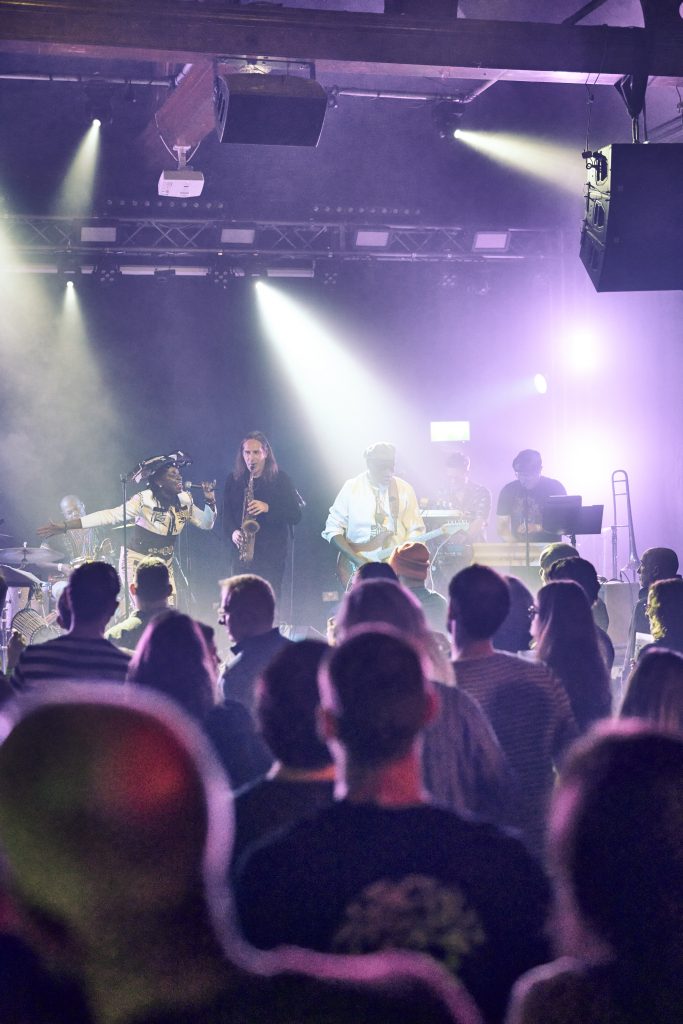
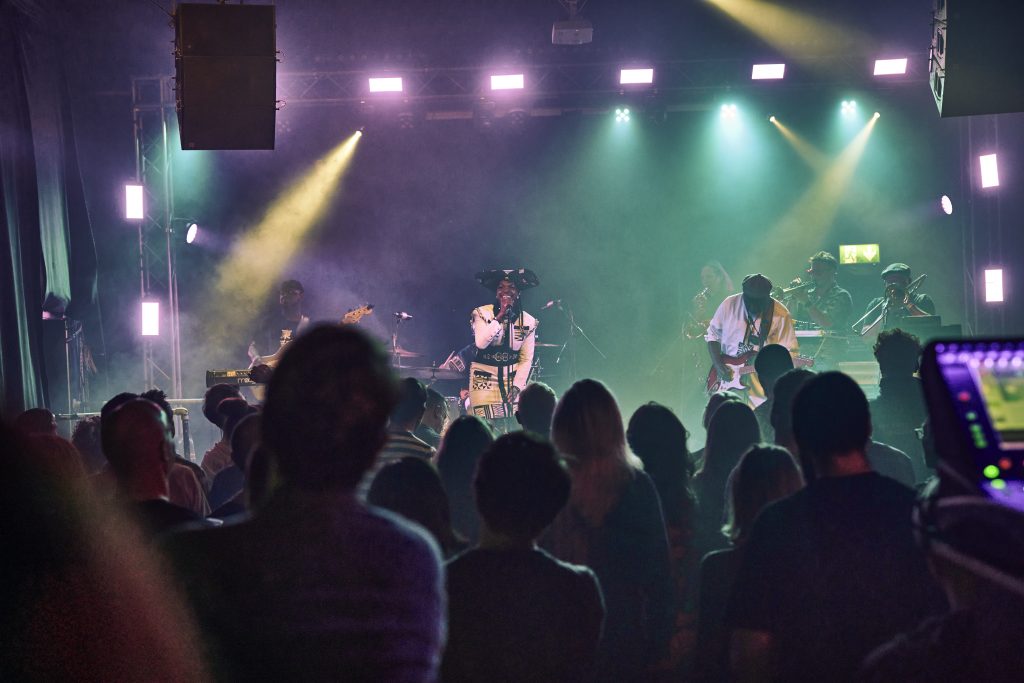
The Parish in Huddersfield, known for its intimate, energetic atmosphere, was the perfect crucible for the sonic fireworks delivered by Ibibio Sound Machine on Friday night. It was an evening that started in soulful reflection and exploded into a joyous, sweat-drenched dance party, proving once again that the best nights out are those where the walls feel like they’re breathing along with the crowd.
Support: Hannah Rowe—A Local Star Shines Bright
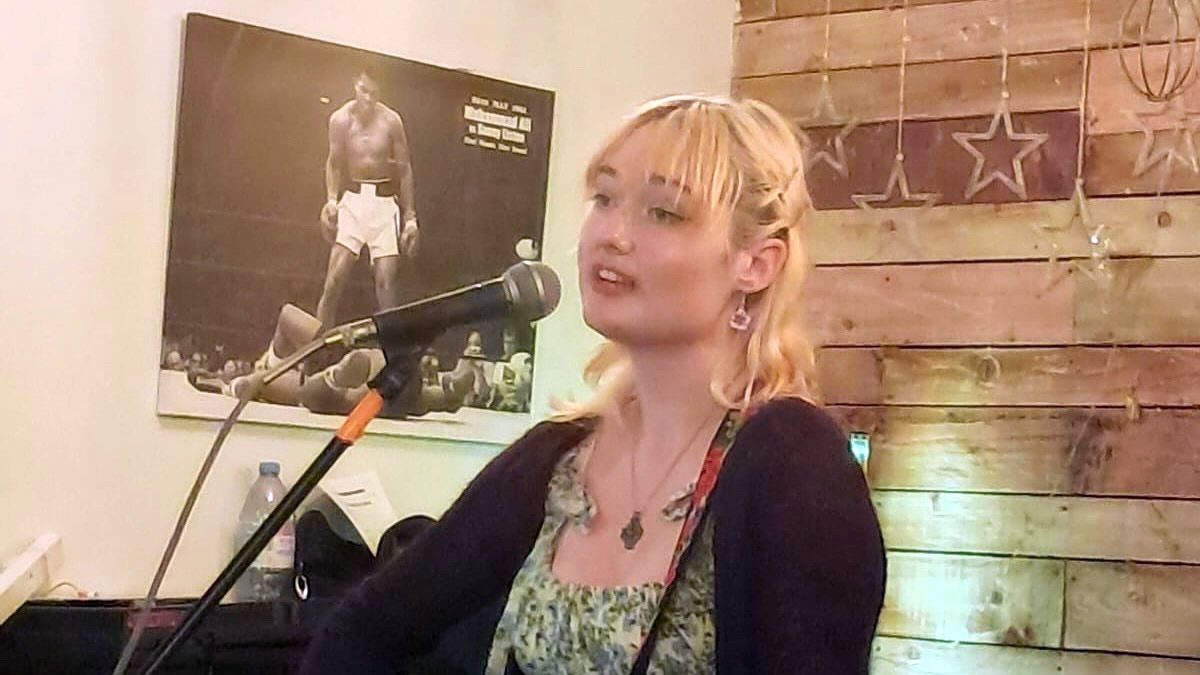
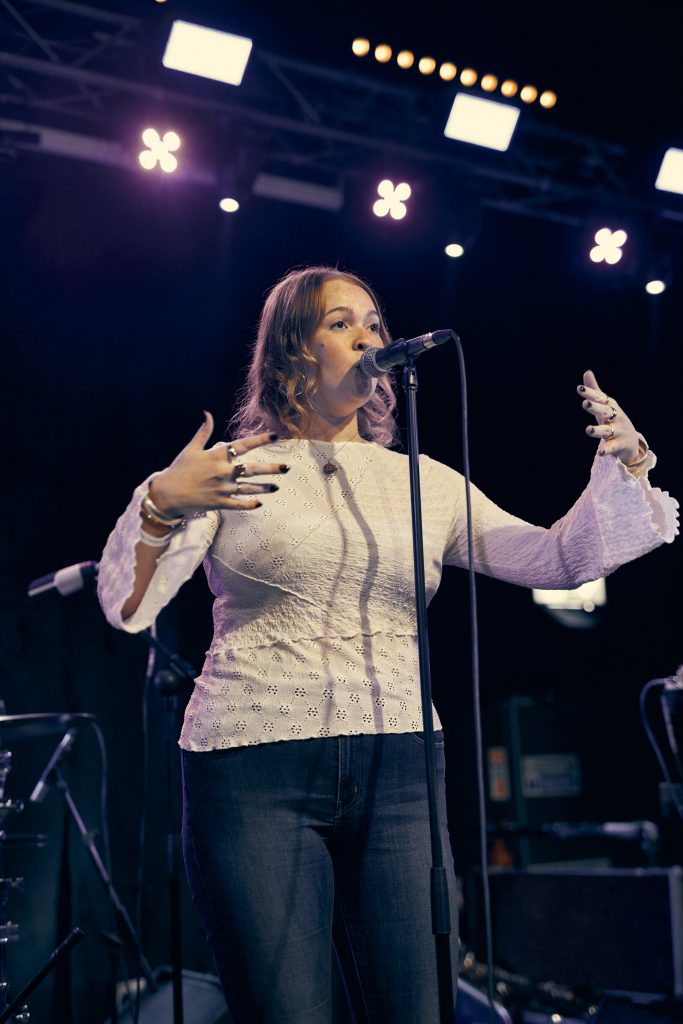
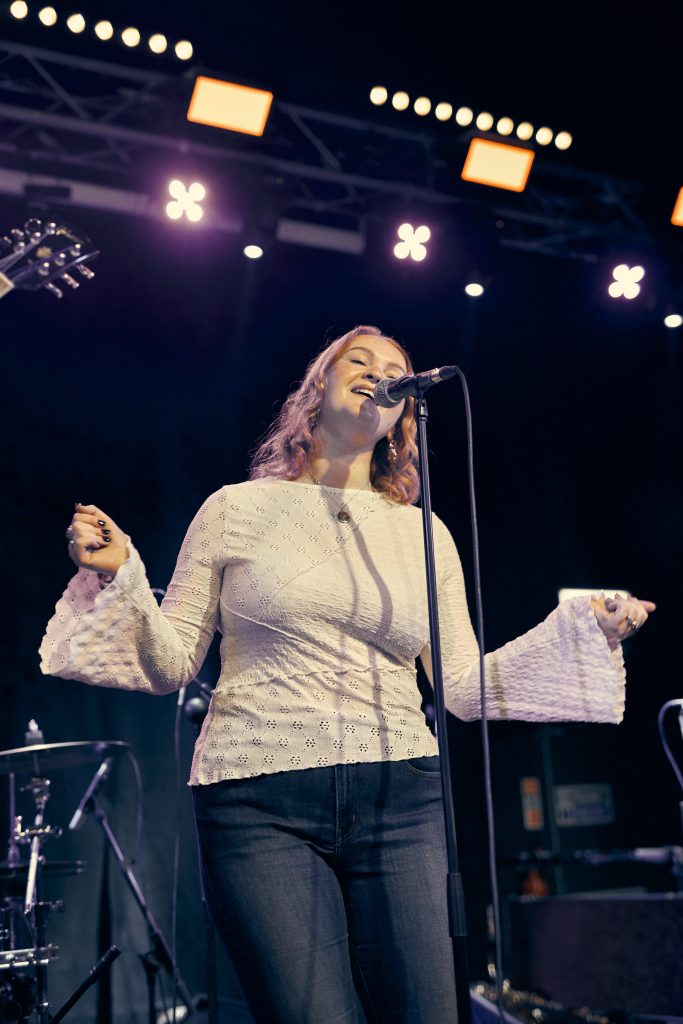
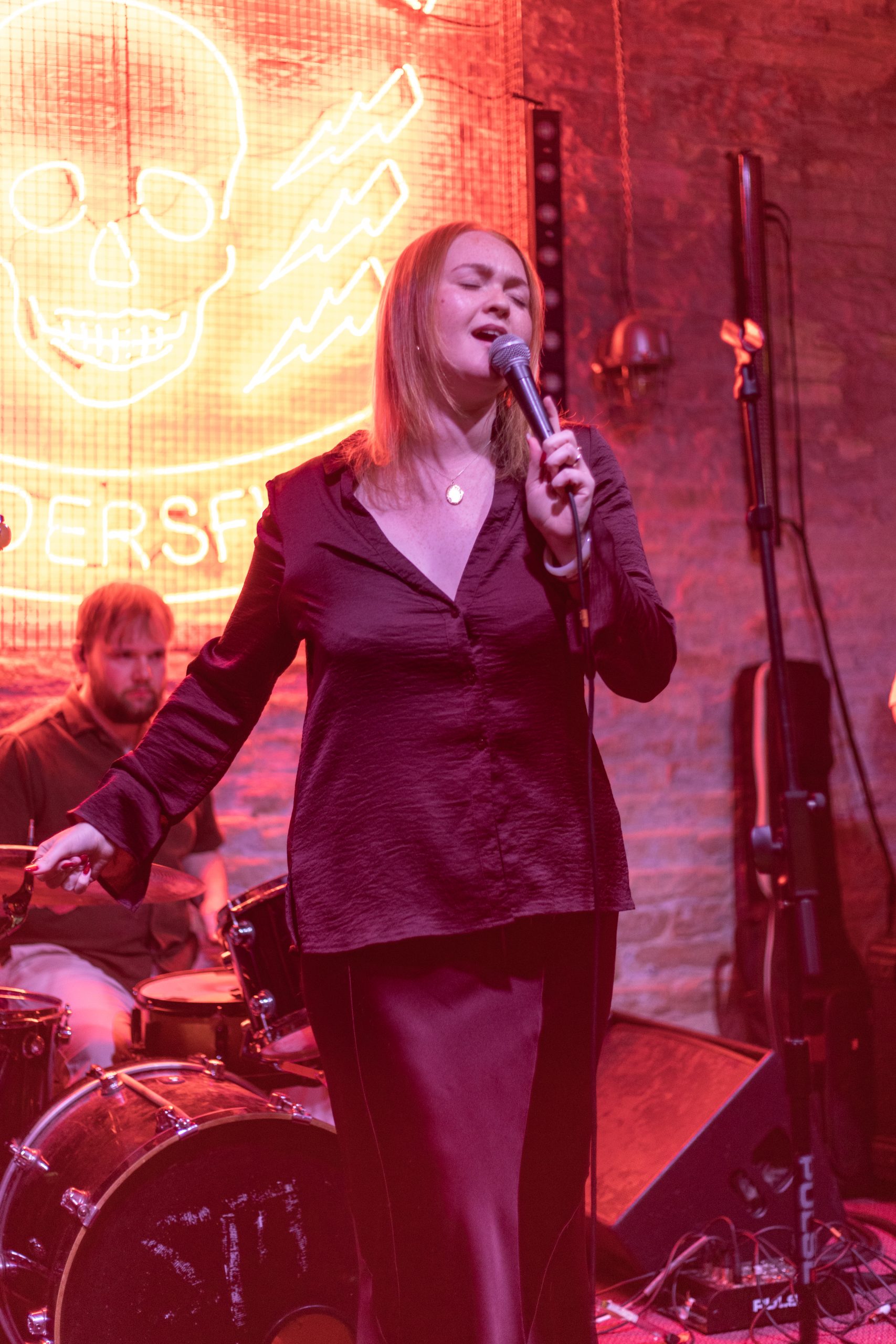
Leeds based and Kirklees Most Wanted alumni Hannah Rowe set the bar high, proving exactly why she’s generating so much buzz. Trading the massive festival stages for the confines of The Parish, Rowe’s powerful, soulful voice filled every corner of the room. Drawing heavily on her jazz and soul influences, she delivered tracks like the reflective “Bellevue” and the massive “Waistcoat” with an emotional depth that belied the venue’s small size. Performing with a scaled down outfit from her normal 10-piece band they managed to create a sophisticated, layered soundscape that was both rich and intimate, providing a perfect, locally-sourced dose of warmth before the main event.
Headliners: Ibibio Sound Machine
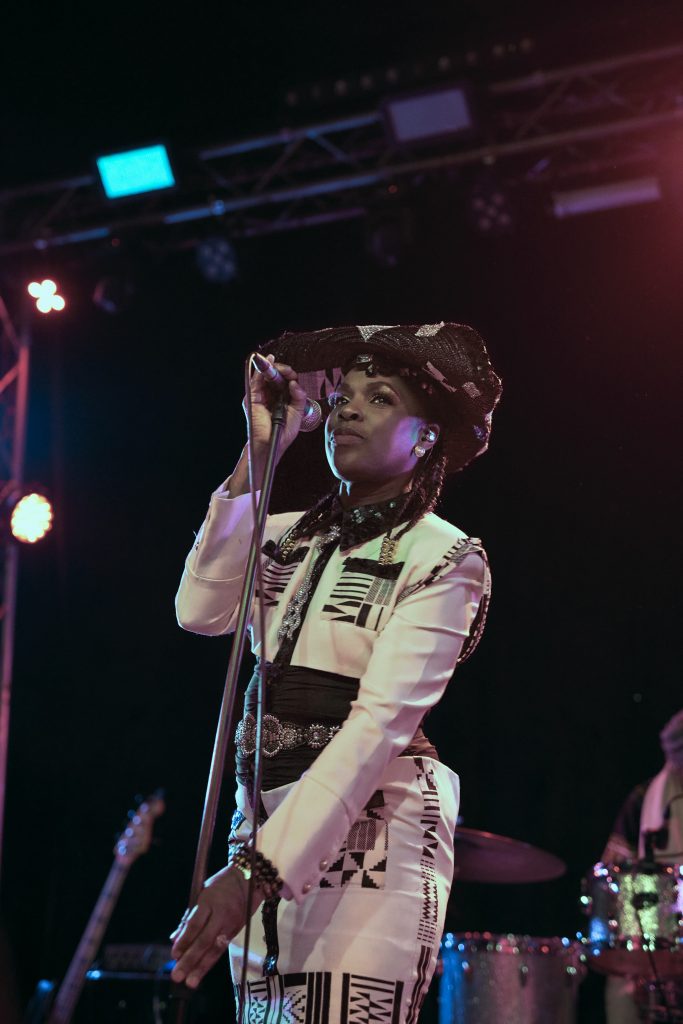
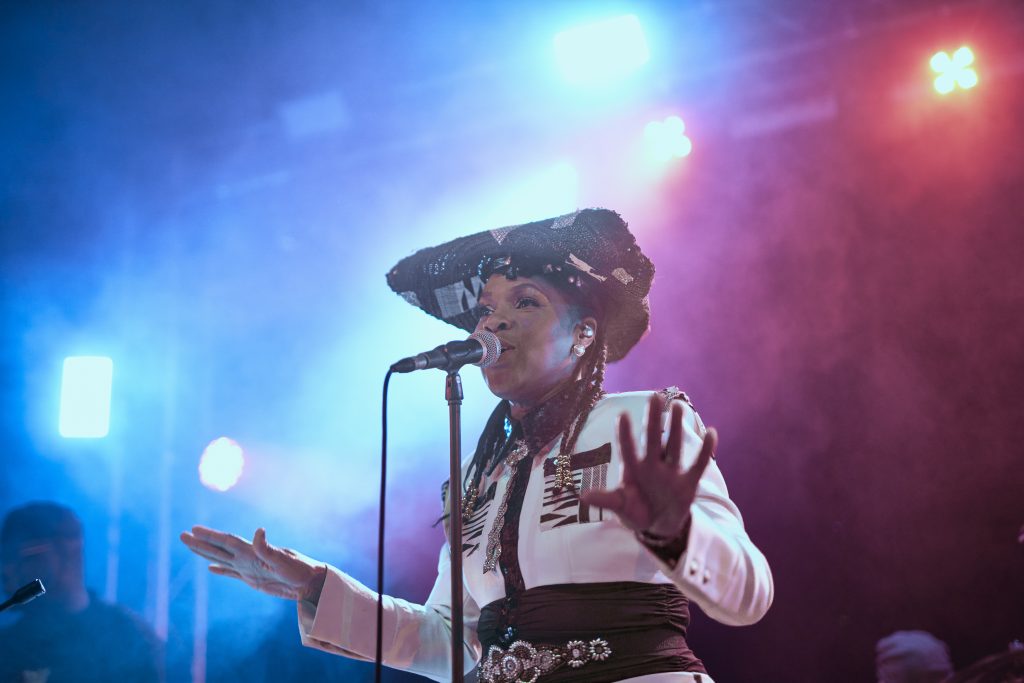
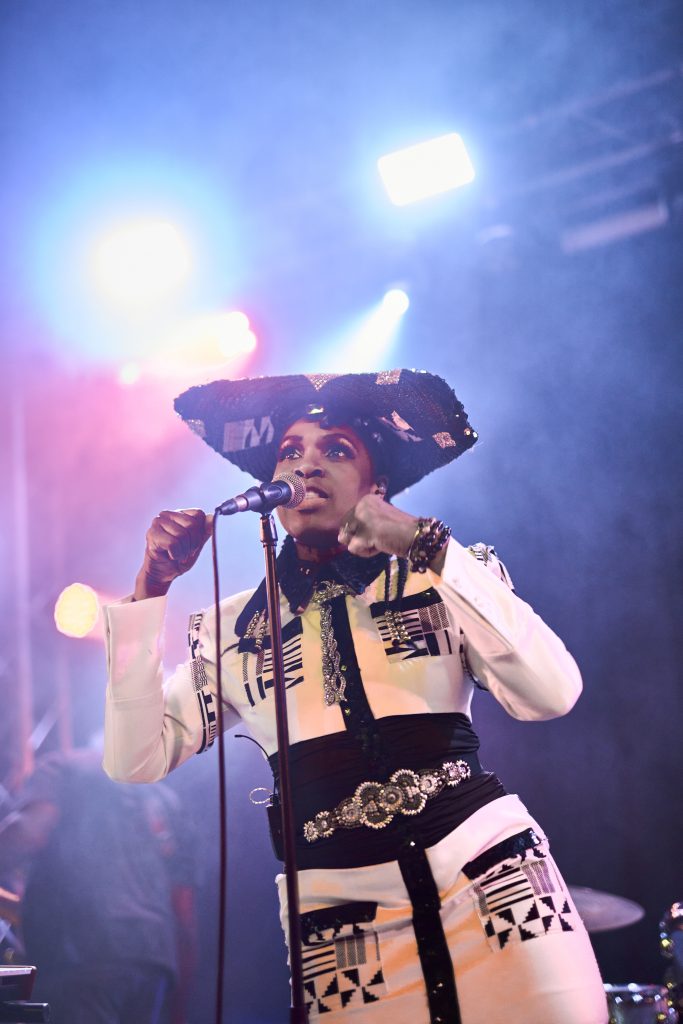
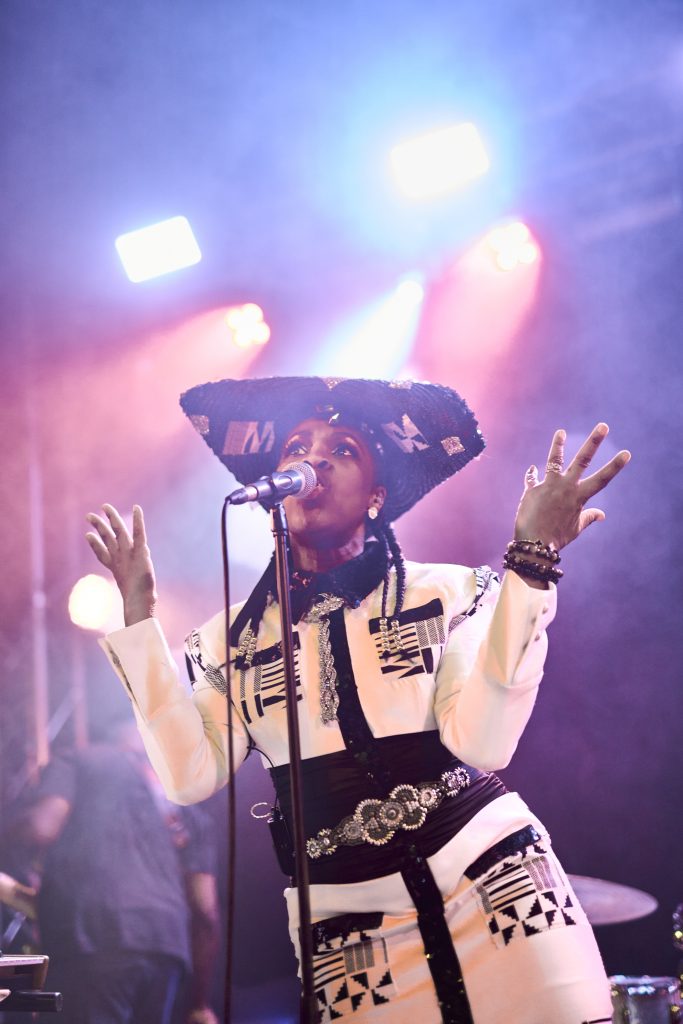
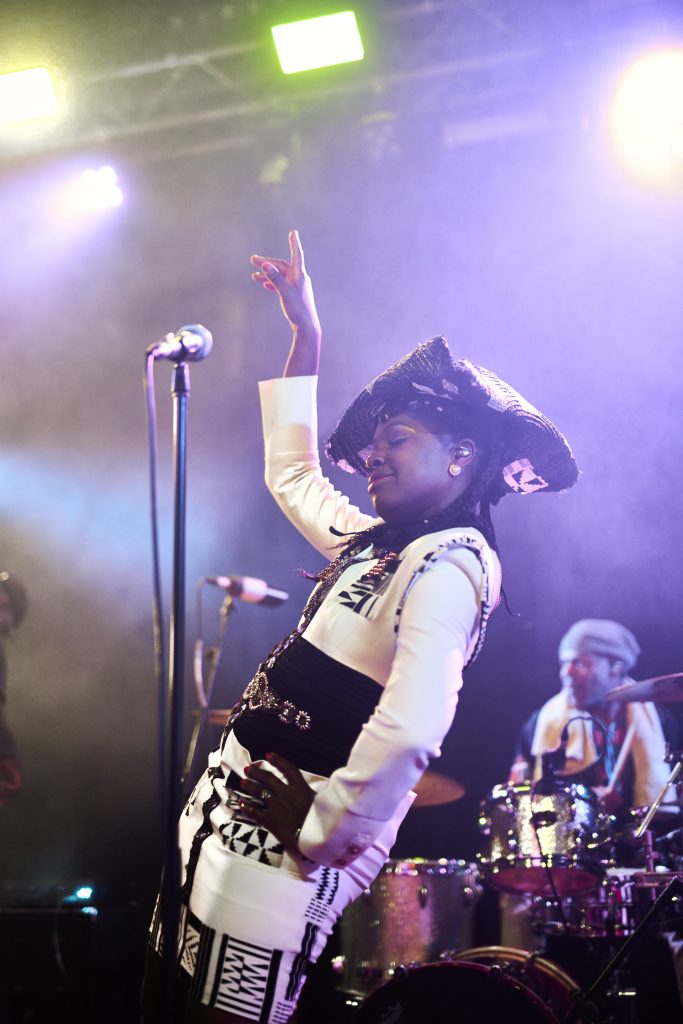
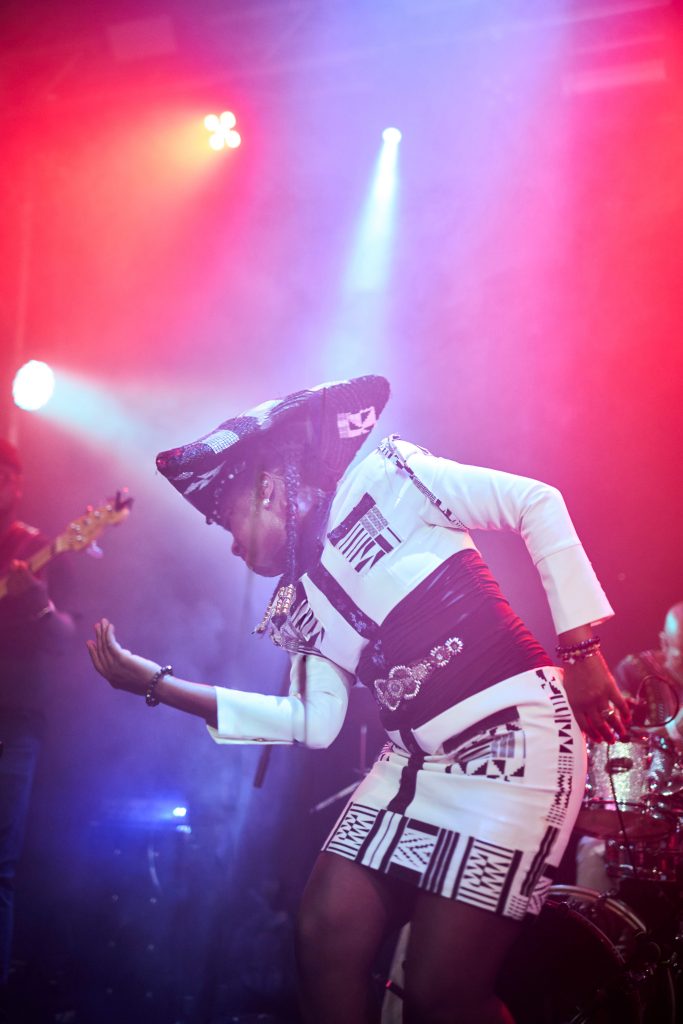
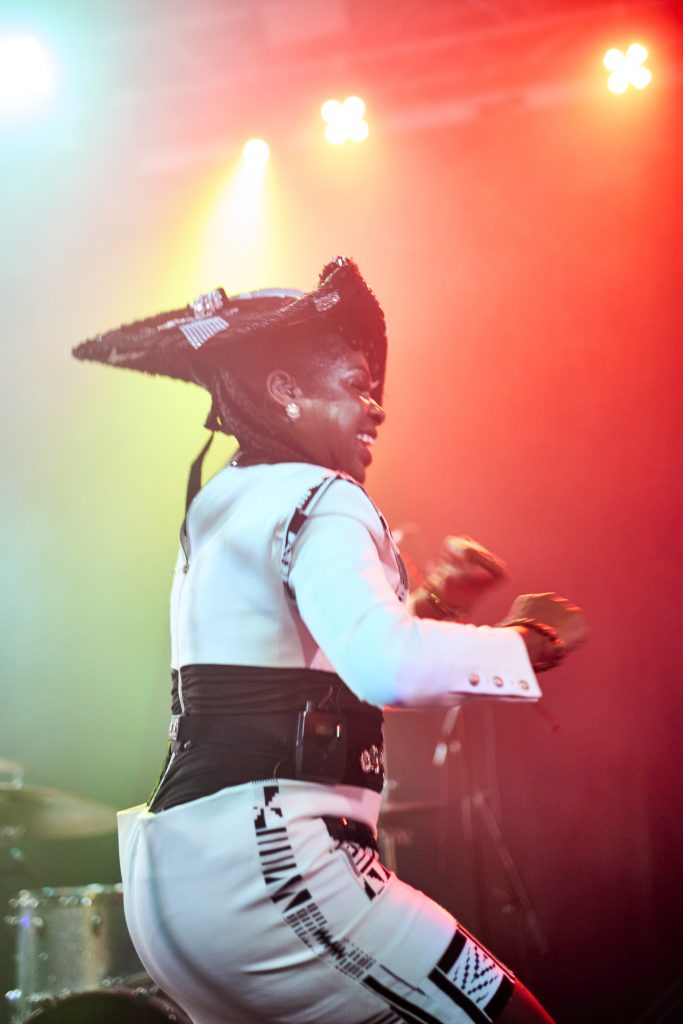
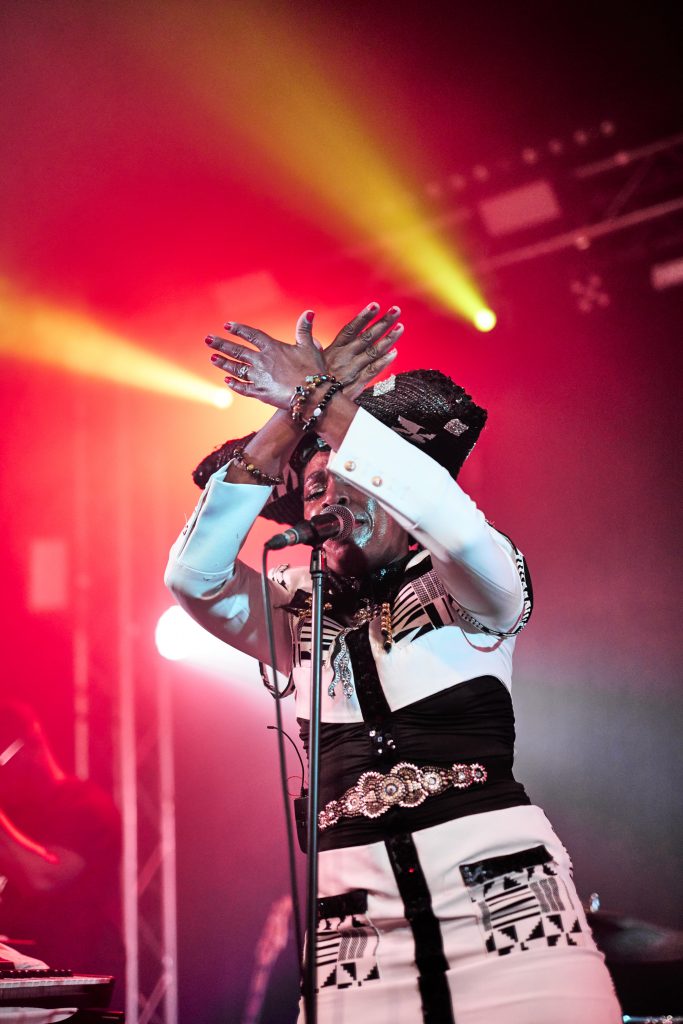
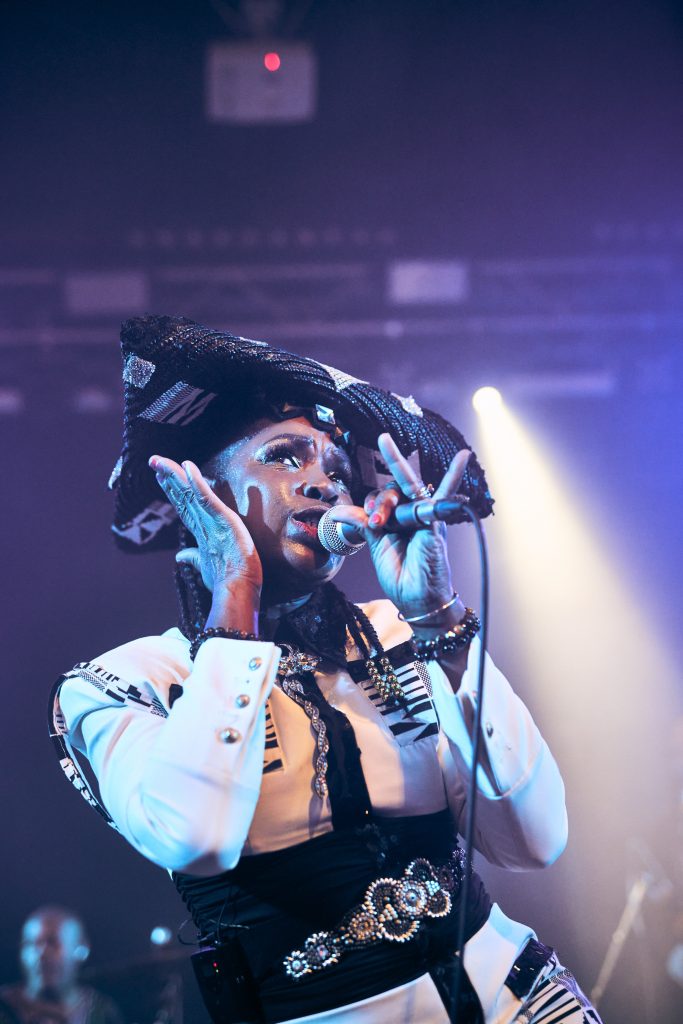
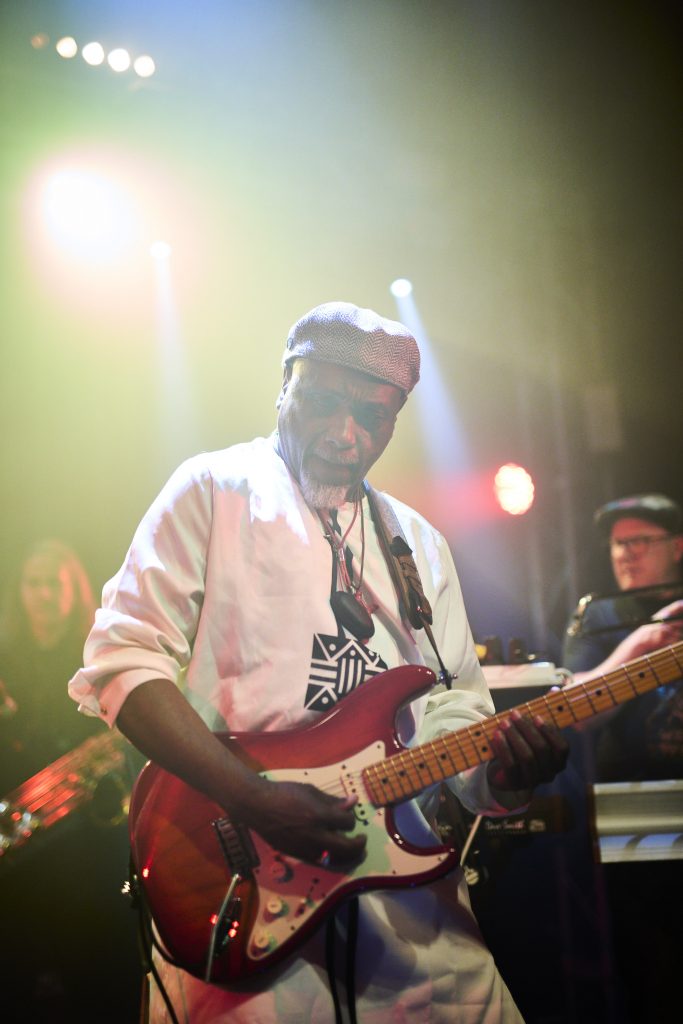
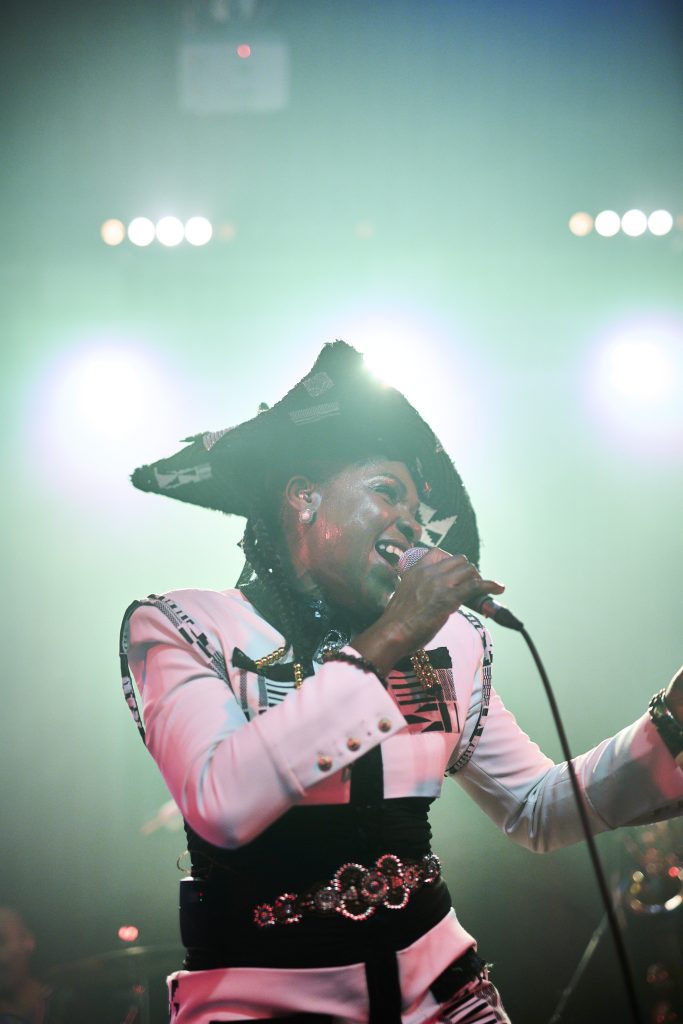
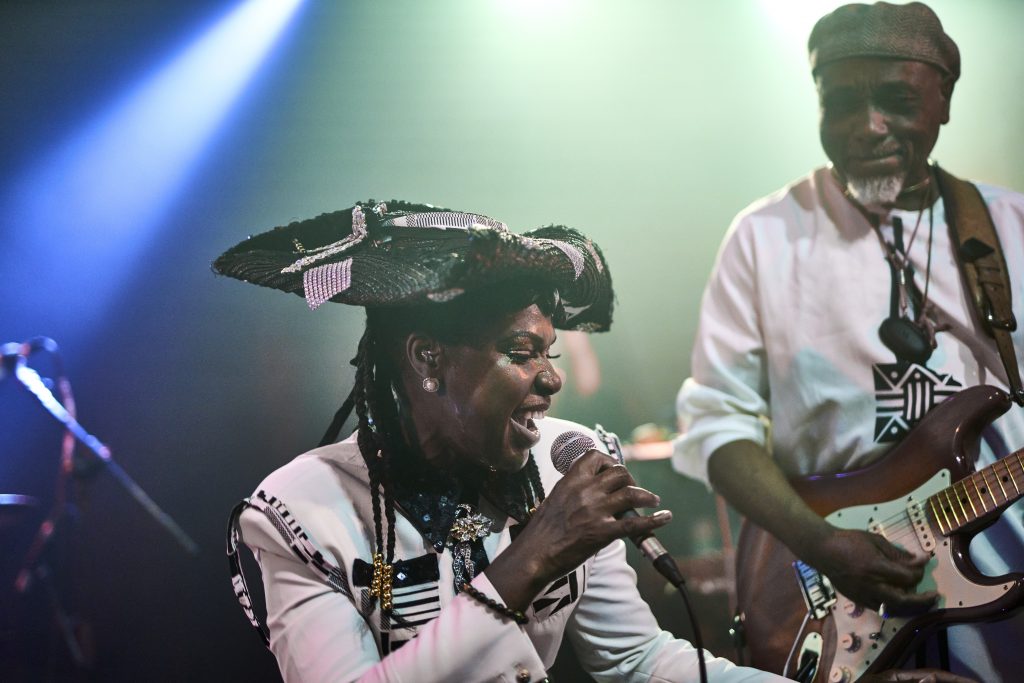
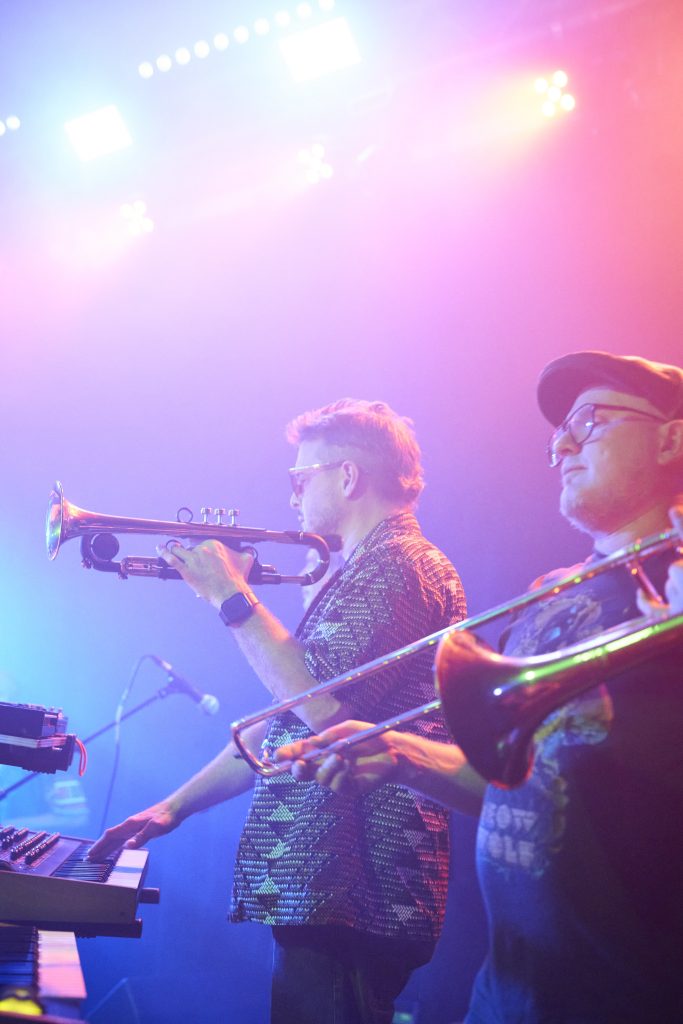
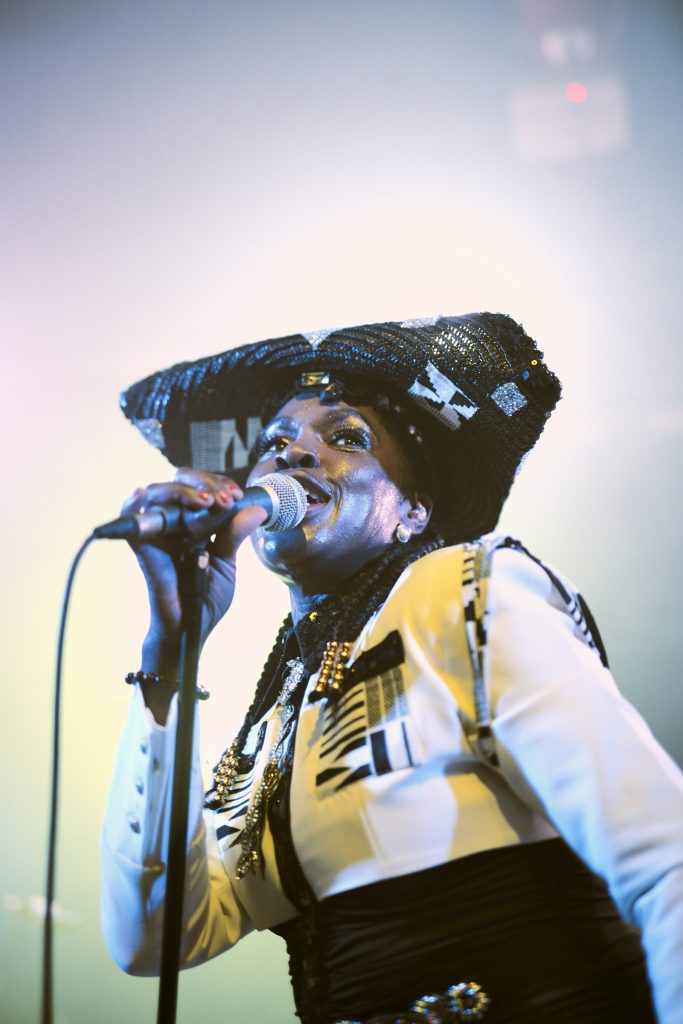
When Ibibio Sound Machine took the stage, the vibe shifted instantly. Led by the magnetic Nigerian-British vocalist Eno Williams, the eight-piece group immediately plunged the packed room into a mesmerizing blend of West African highlife, post-punk electronica, and pure 80s synth-funk.
Williams is an unstoppable force of nature, narrating in the Ibibio language (often translated in real-time through her movements and sheer energy) while commanding the stage. The band’s setlist, featuring fan favourites like “Electricity,” “The Chant (Iquo Isang),” and the hypnotic “Protection From Evil,” was a masterclass in controlled chaos. Each song was a vibrant, polyrhythmic workout, driven by the relentless, propulsive basslines and the swirling, retro synthesizers that give the band its distinctive electronic edge.
The Parish’s relatively small 300-capacity room amplified the intensity; there was no room to stand still. By the time the band launched into the irresistible call-and-response of “Fire Fire Fire, Higher Higher Higher” the floor was a unified mass, hands in the air, echoing the sheer joy radiating from the stage.
The Huddersfield crowd’s embrace of the band’s global sound was a testament to the universal language of rhythm. Ibibio Sound Machine didn’t just play a gig; they curated a transcendental experience that lifted the spirits and left everyone feeling like they’d just participated in something primal and necessary. An unforgettable show, cemented by the raw energy that only a venue like The Parish can provide.
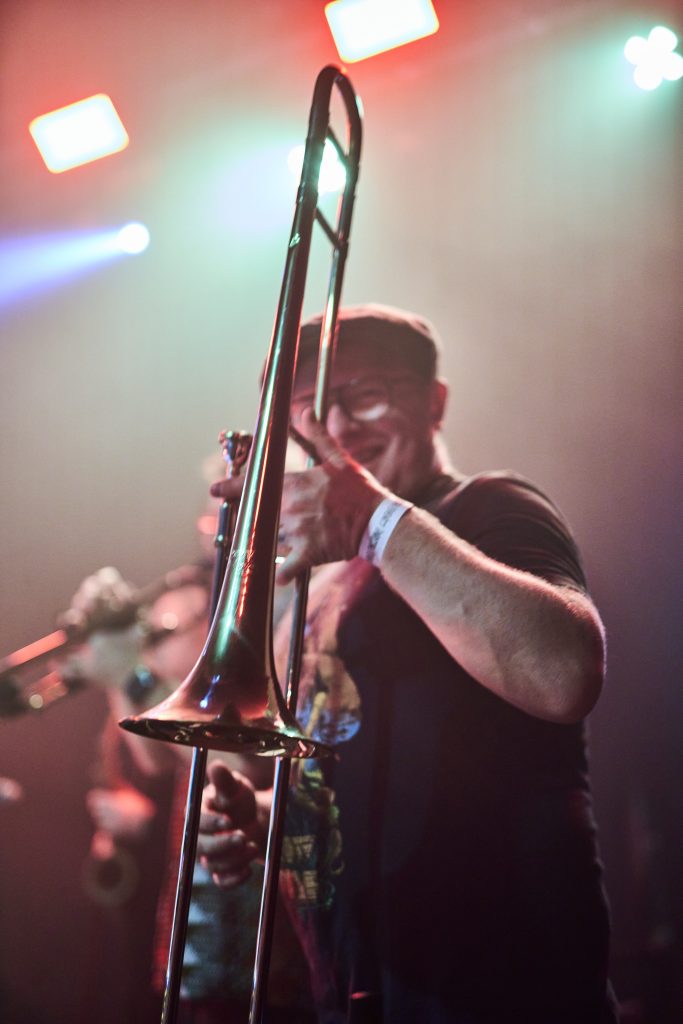
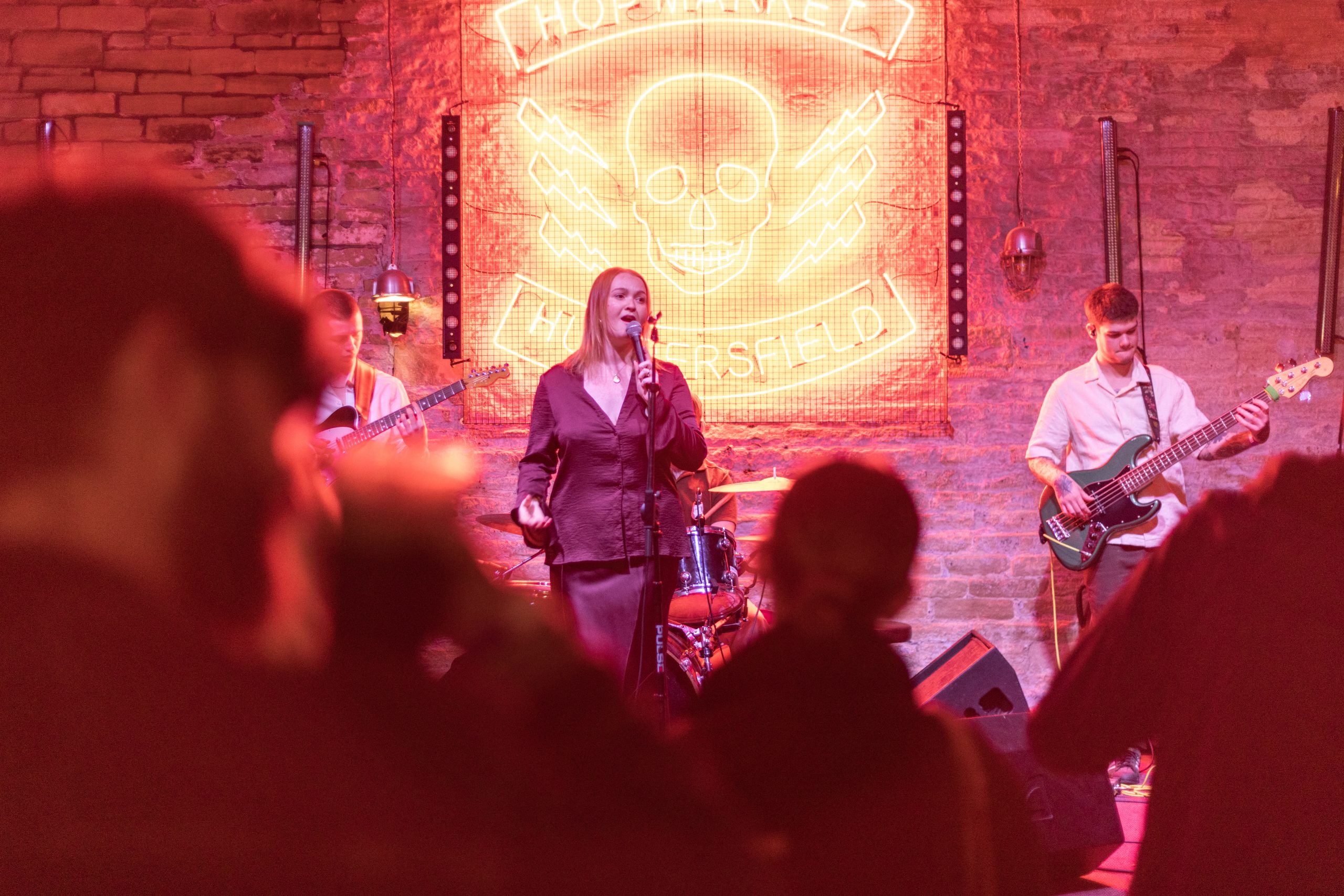
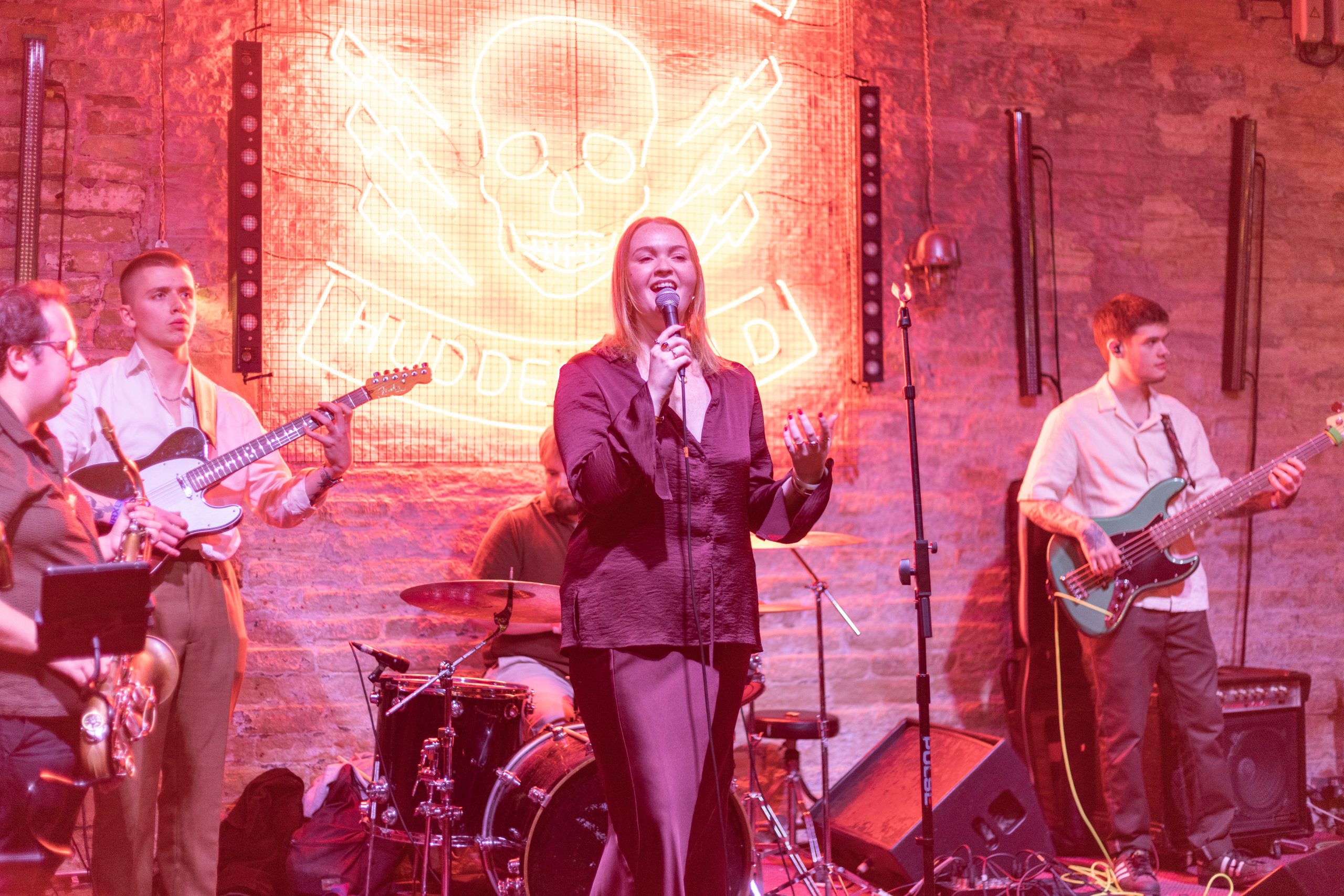
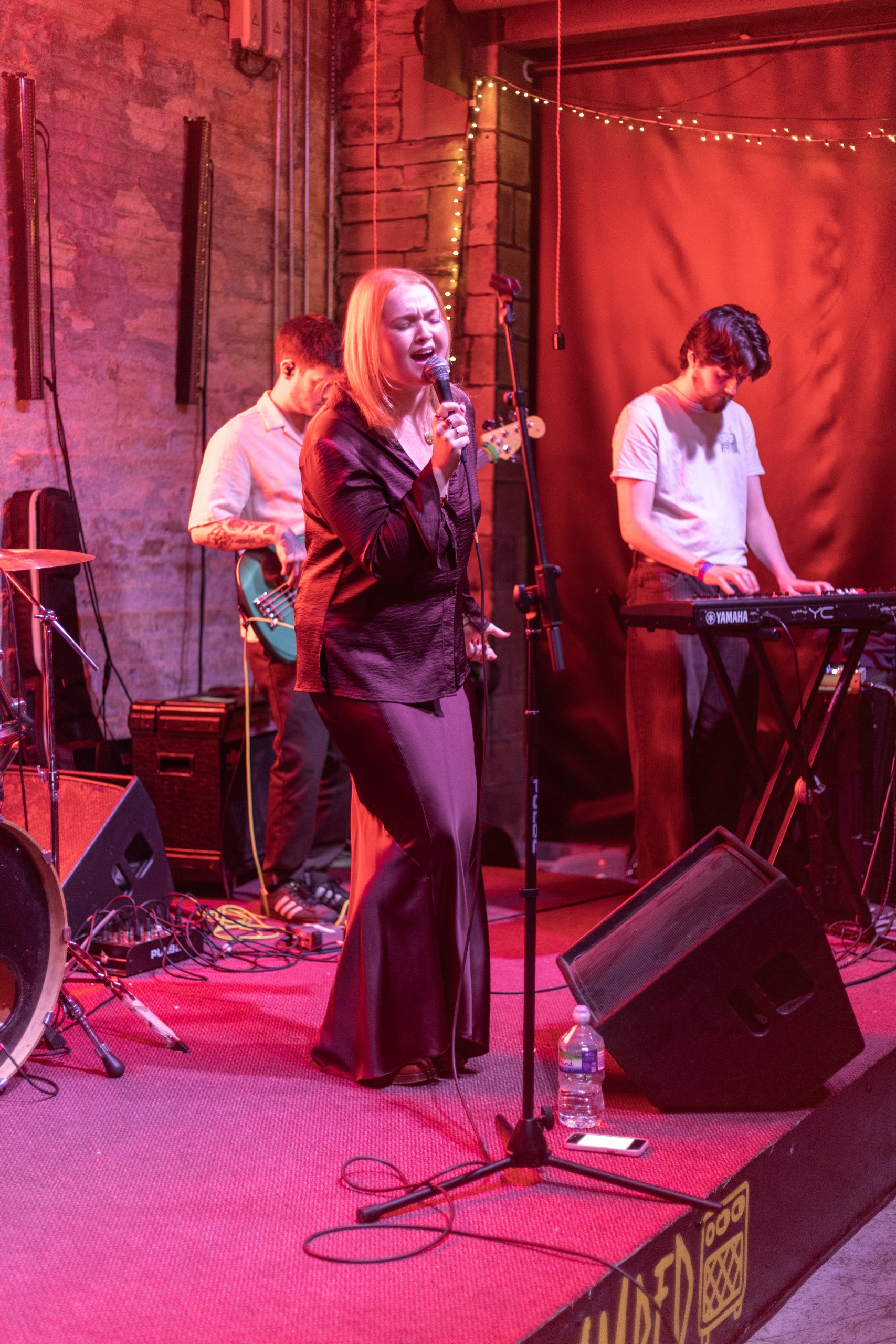
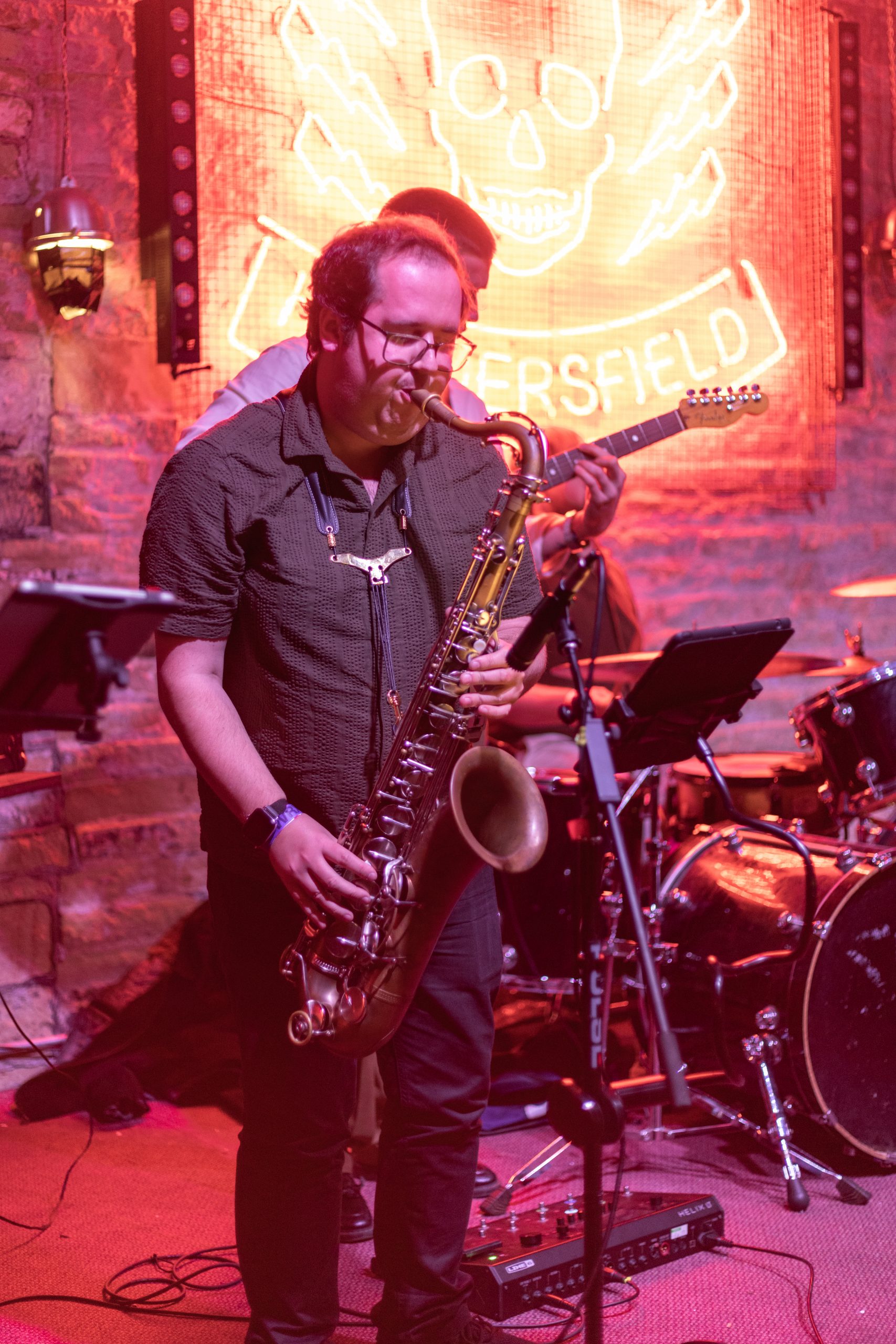
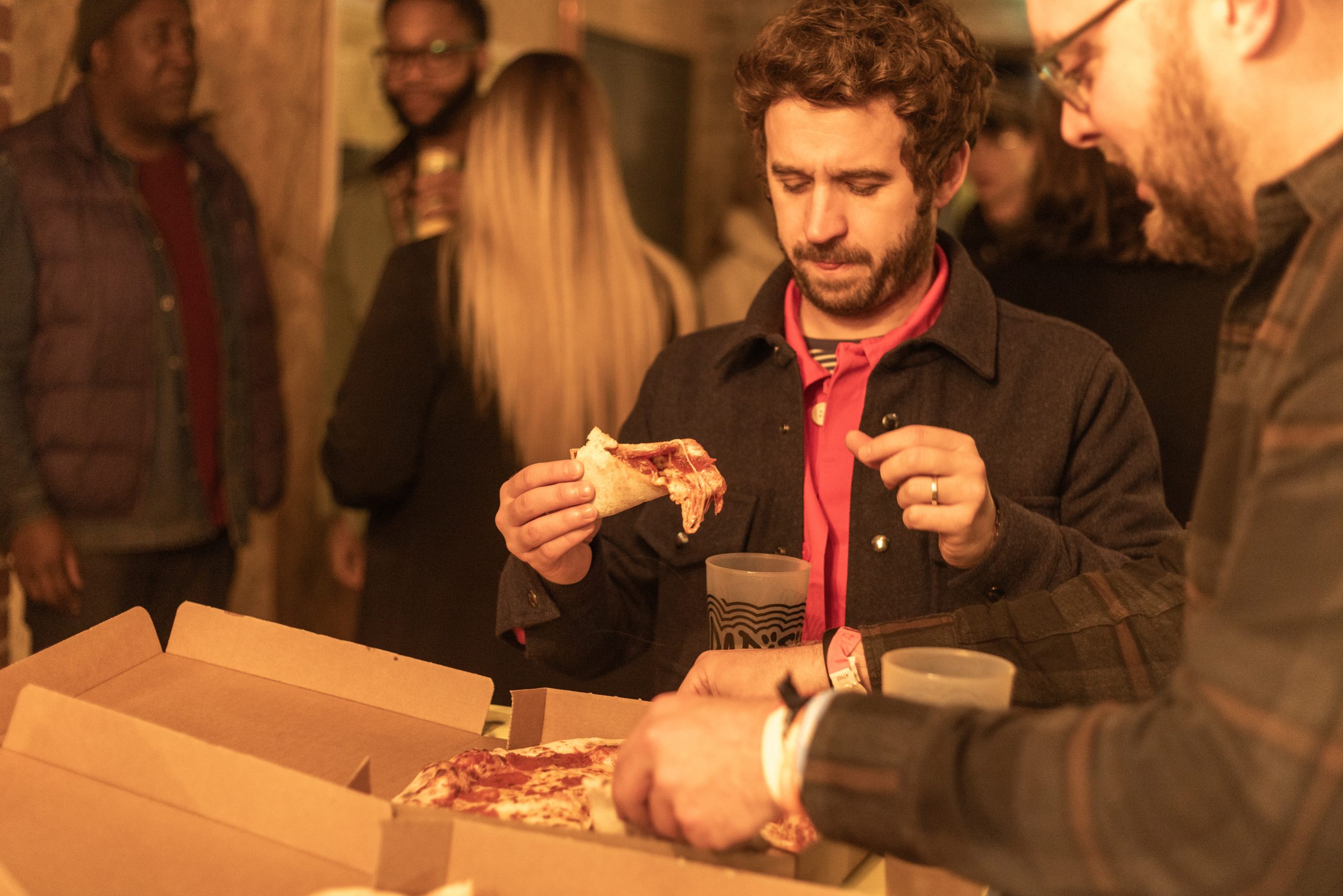
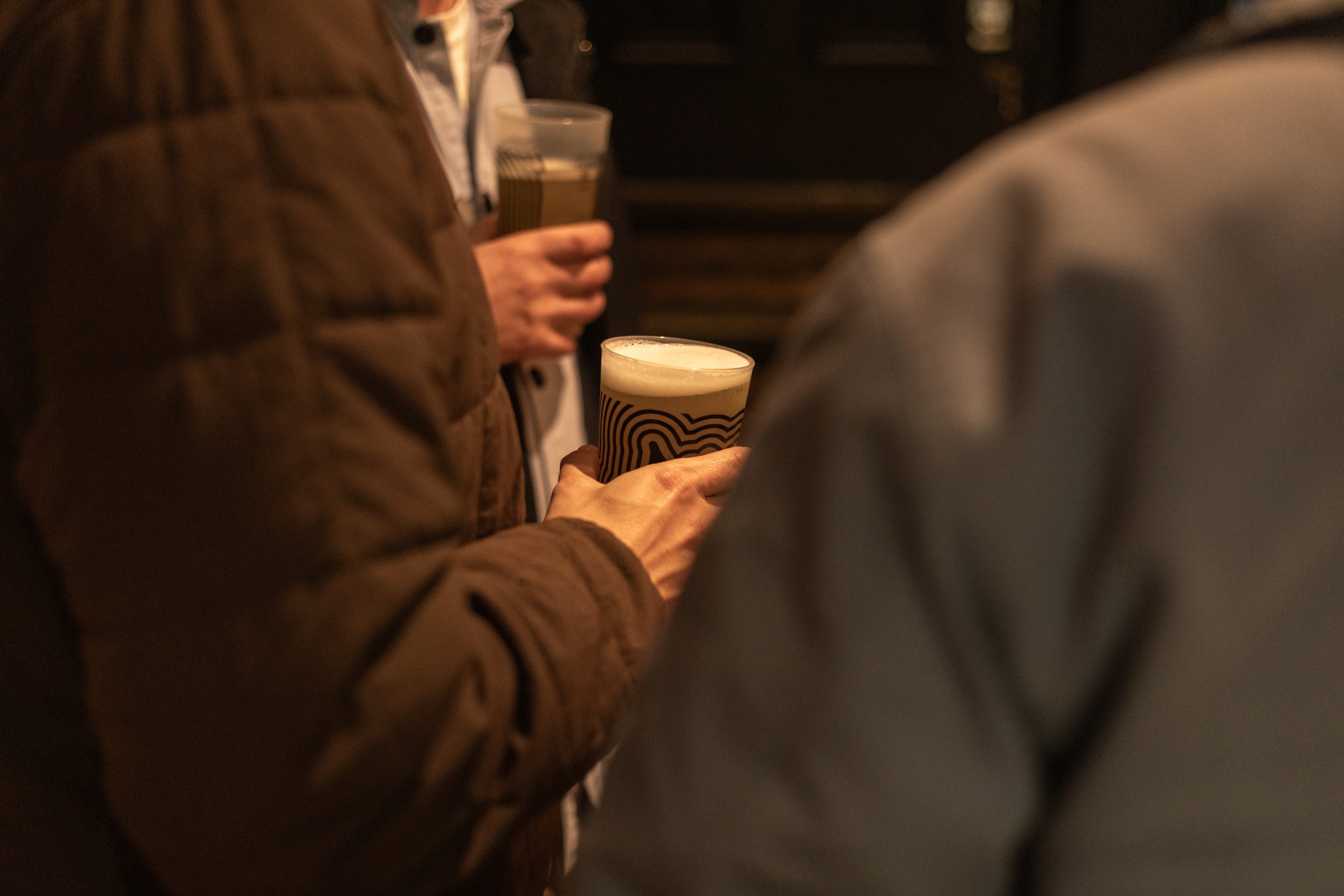
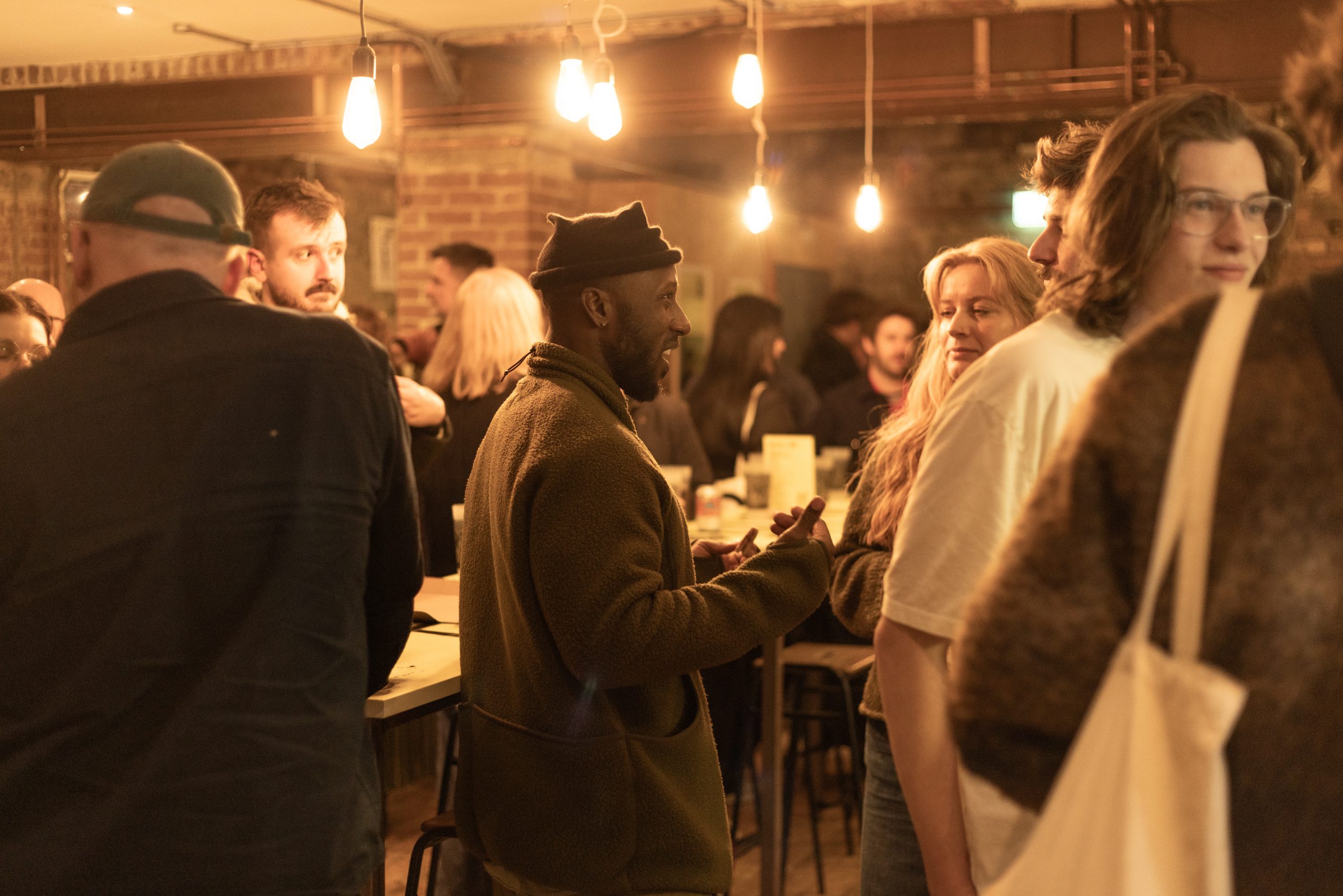
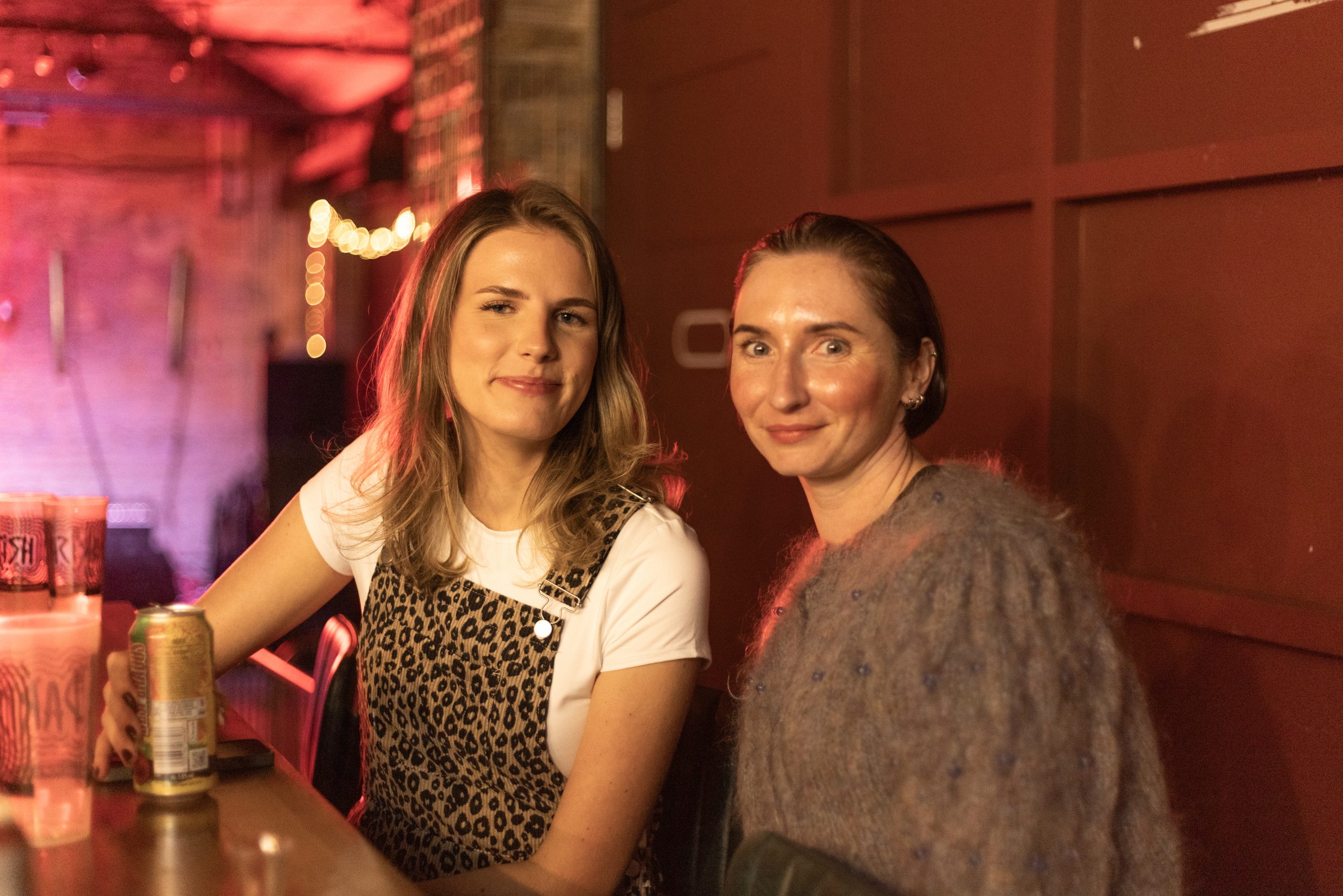
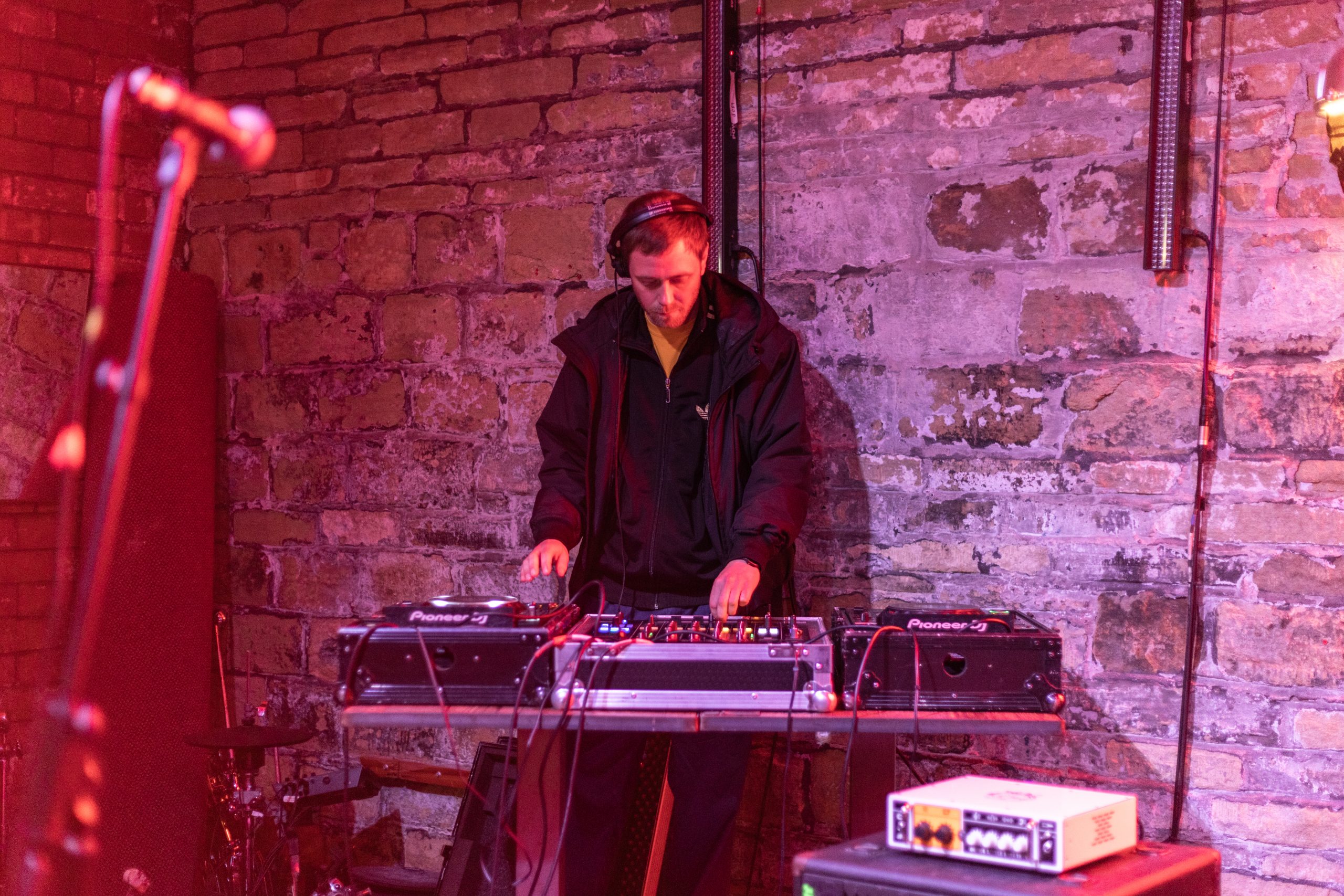
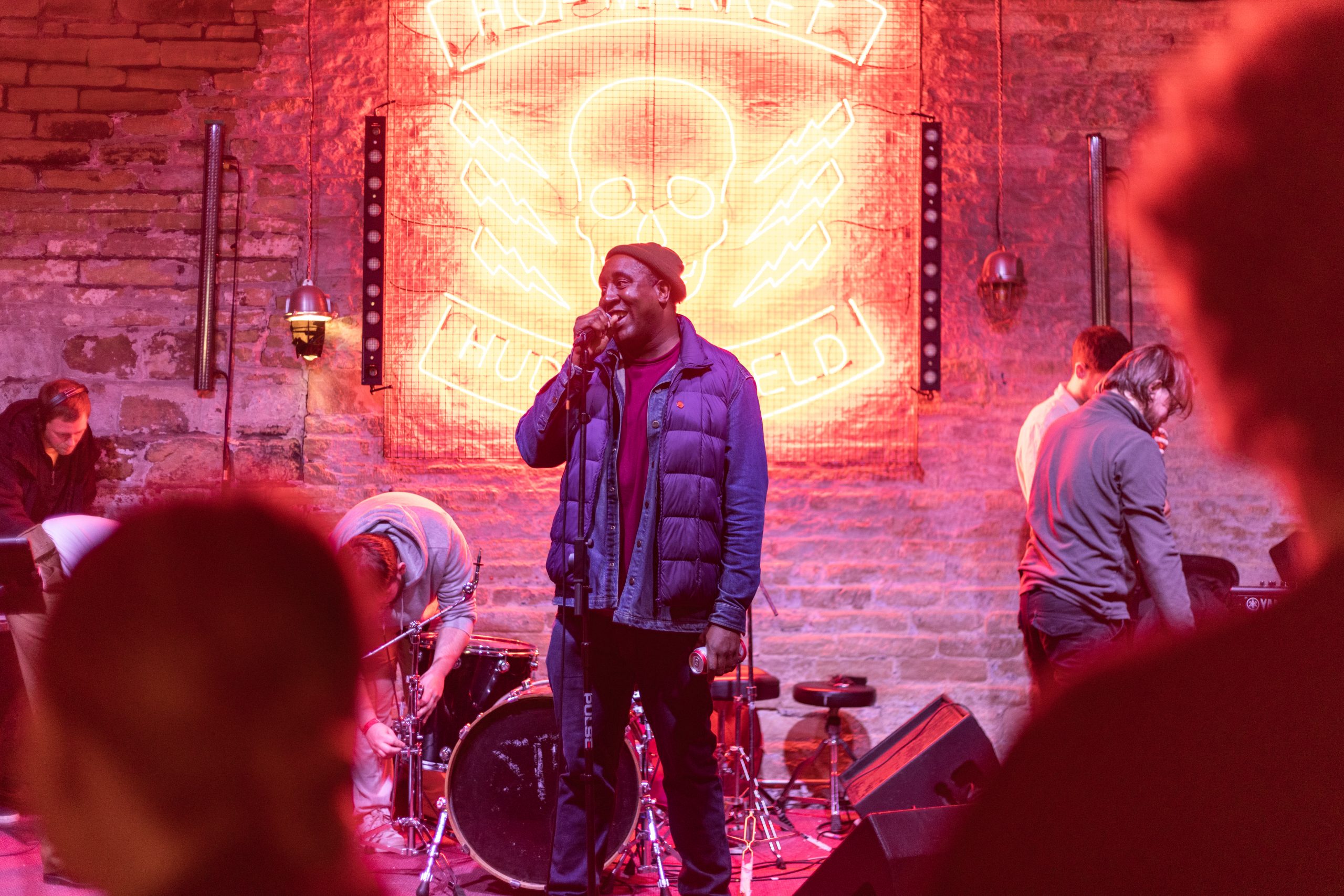
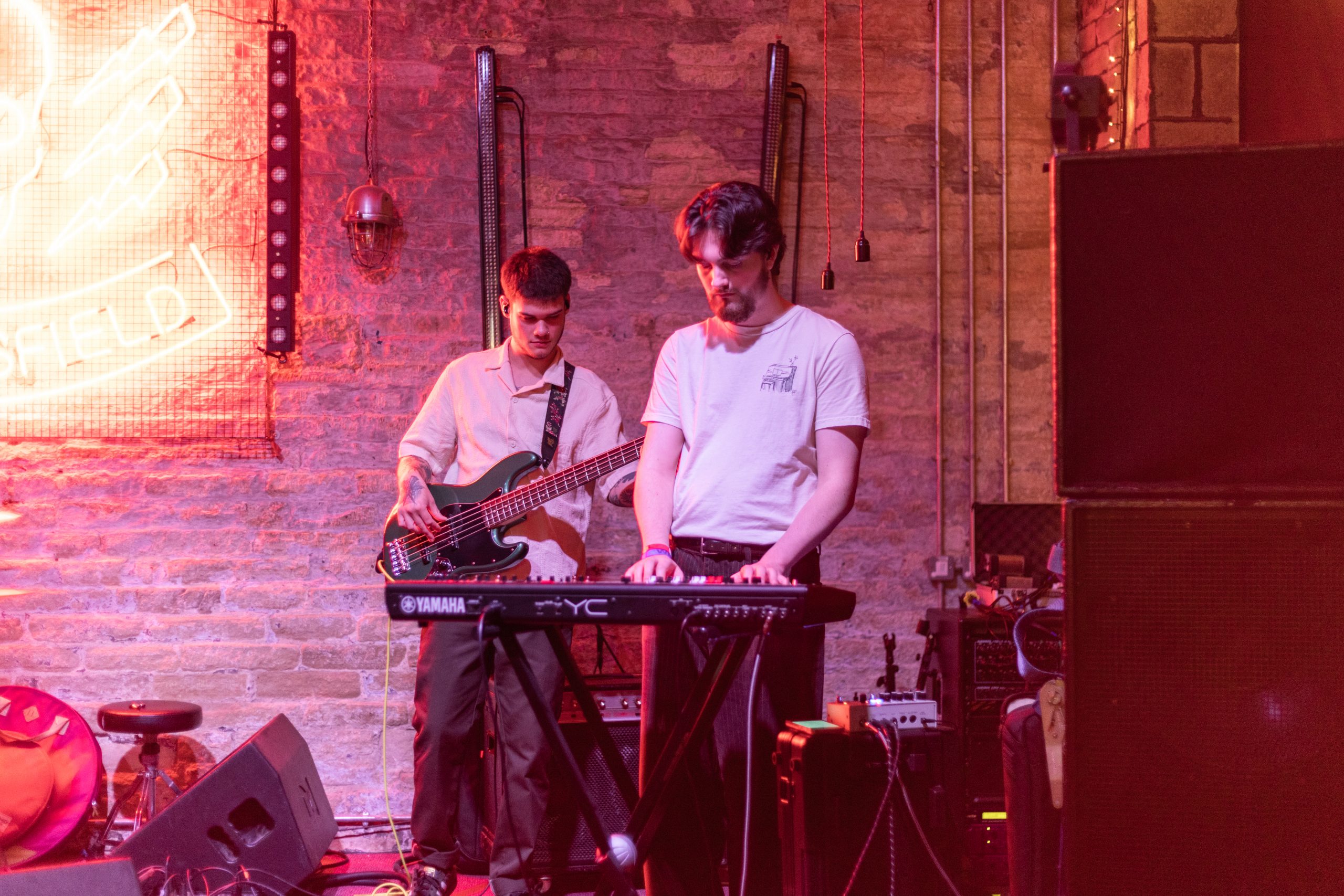
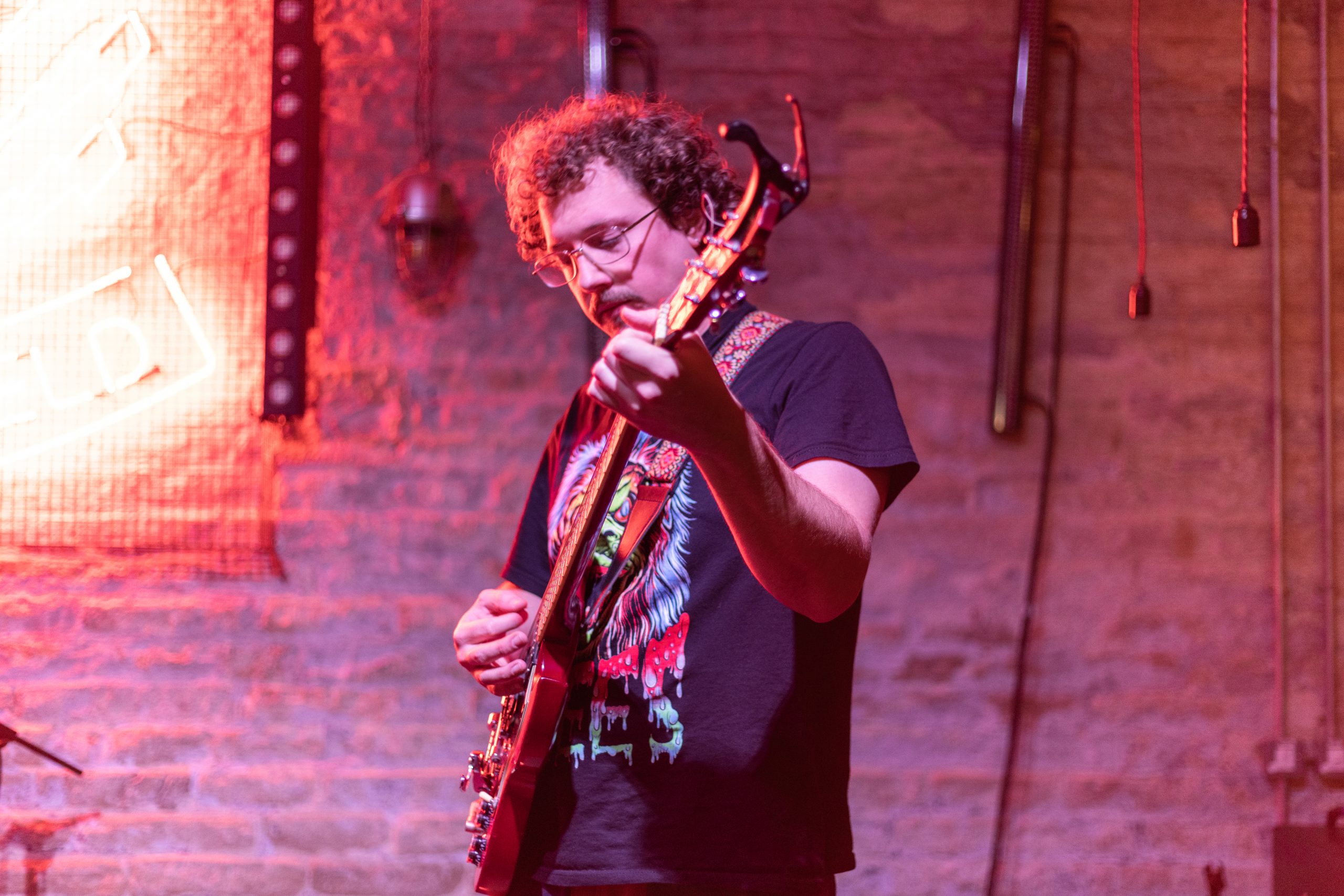
The Wilson’s Republic WRXL event, which celebrated a decade of fostering creative community with the theme of ‘Routes,’ culminated in an absolutely electrifying private afterparty at Amped in Huddersfield.
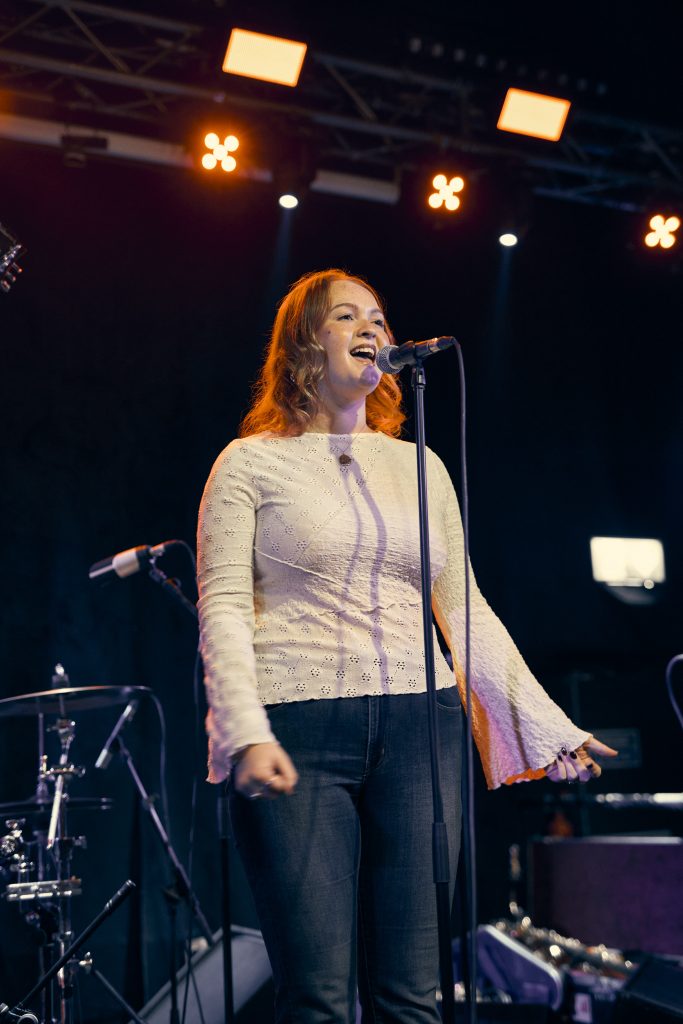
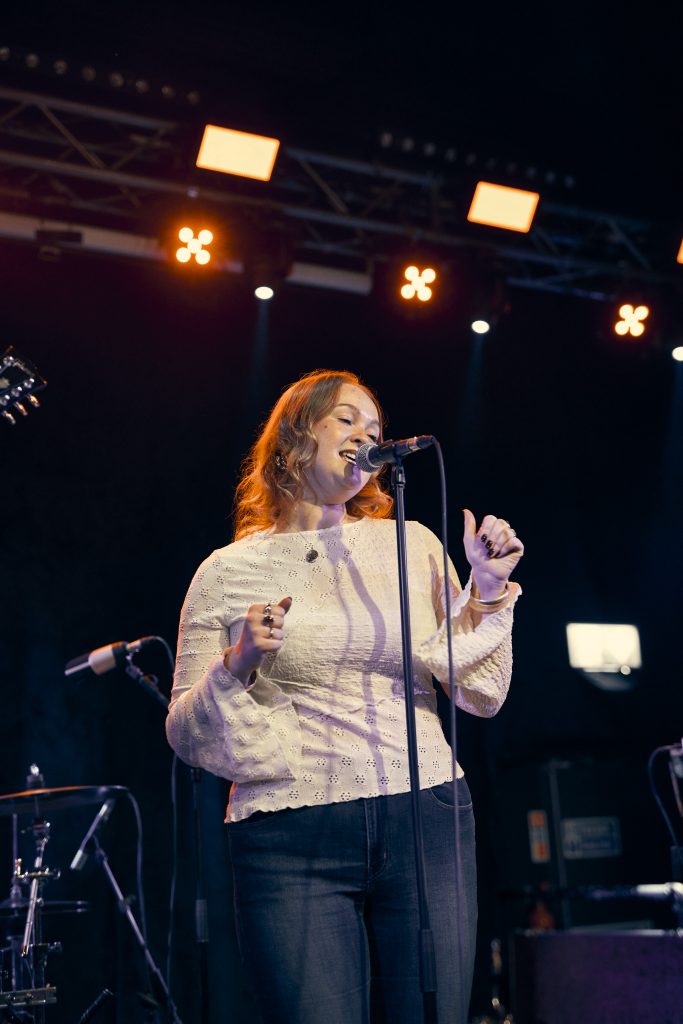
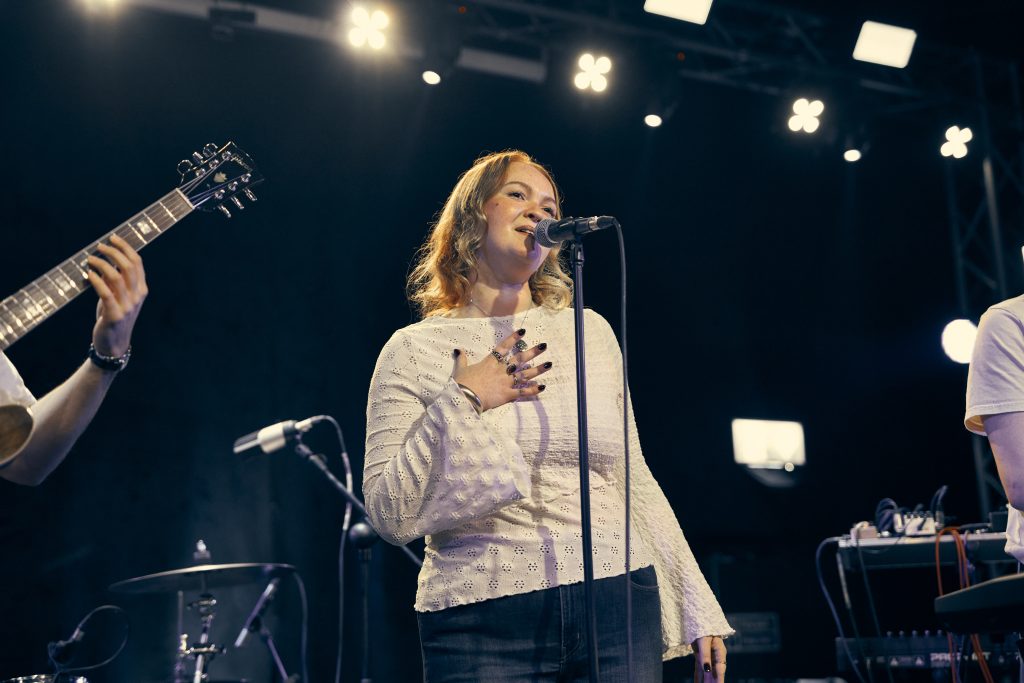
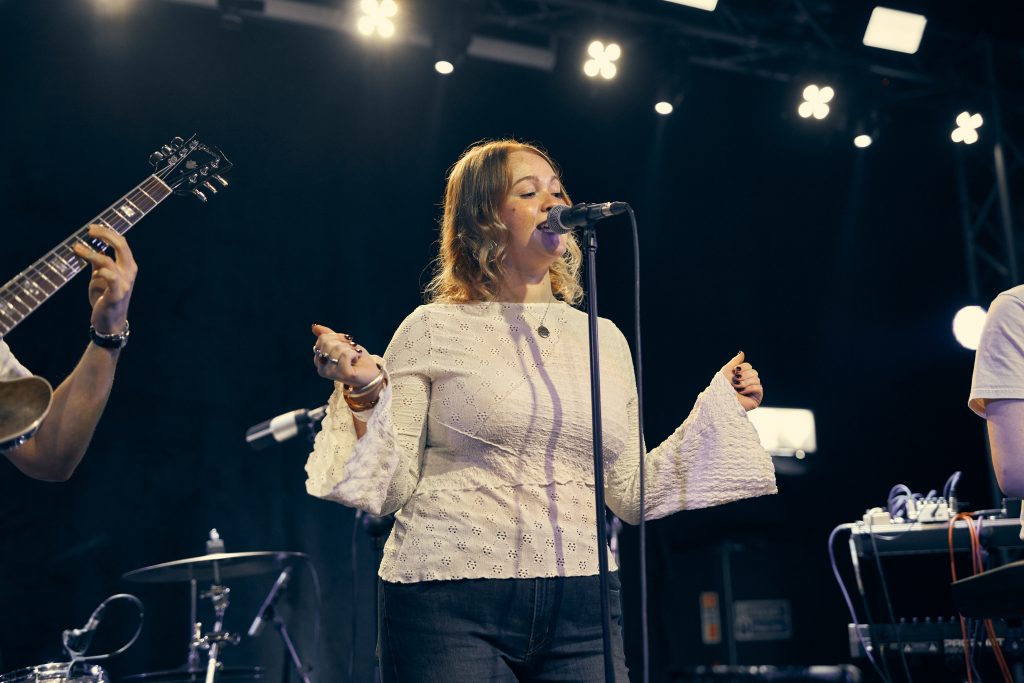
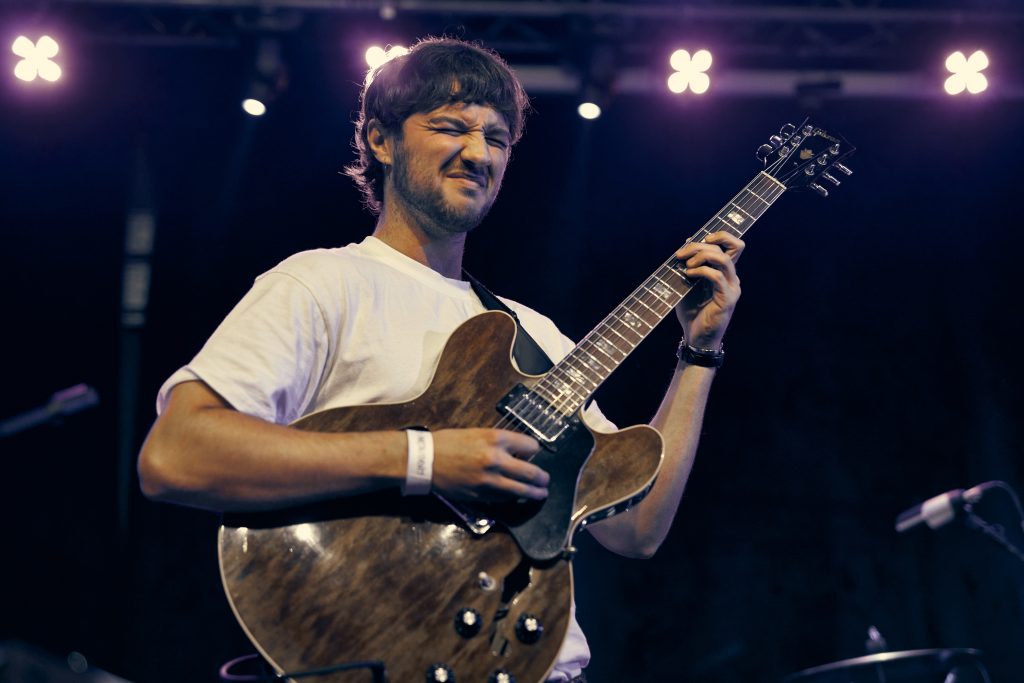
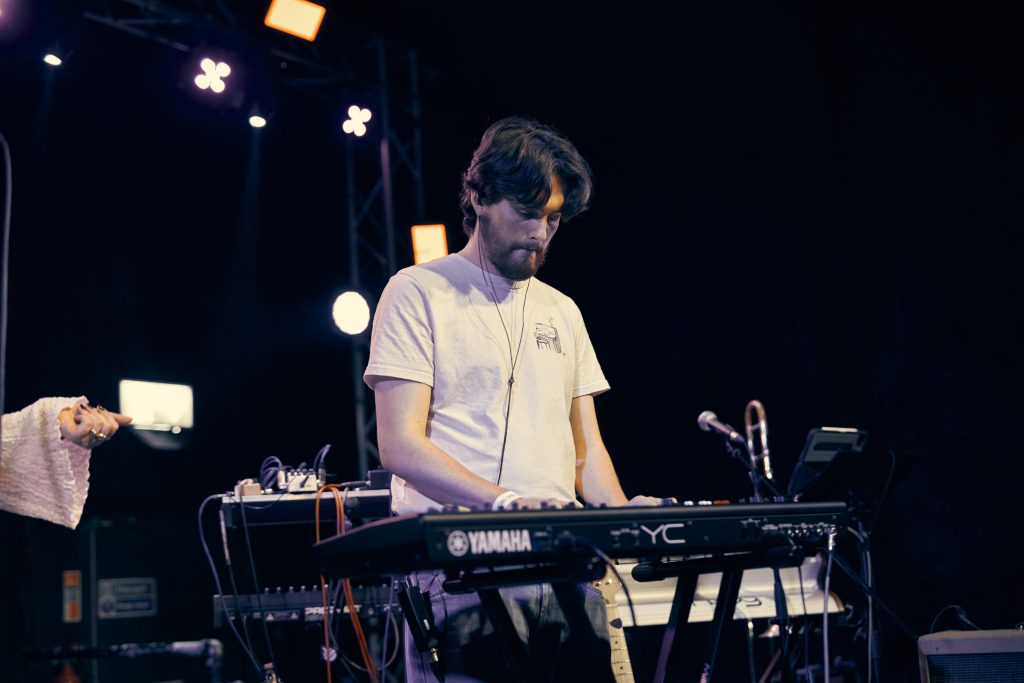
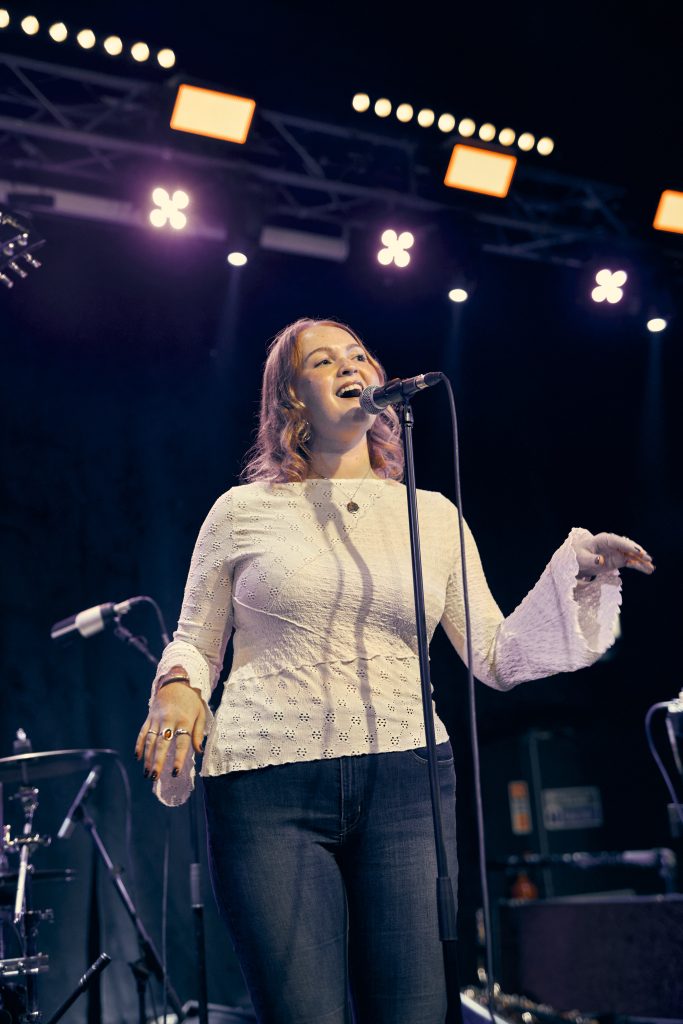
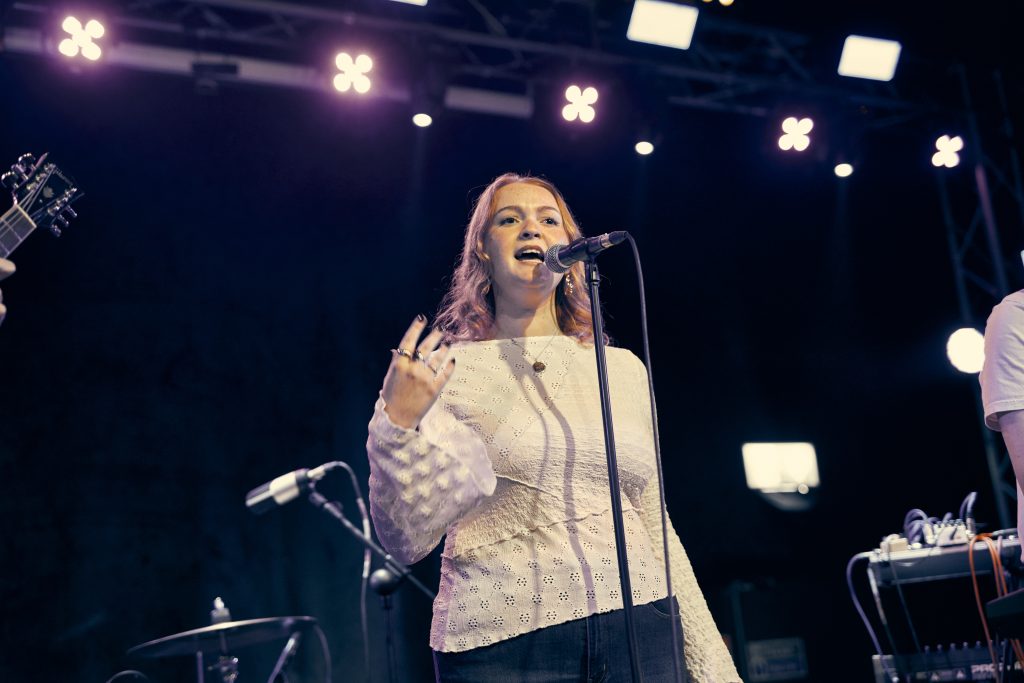
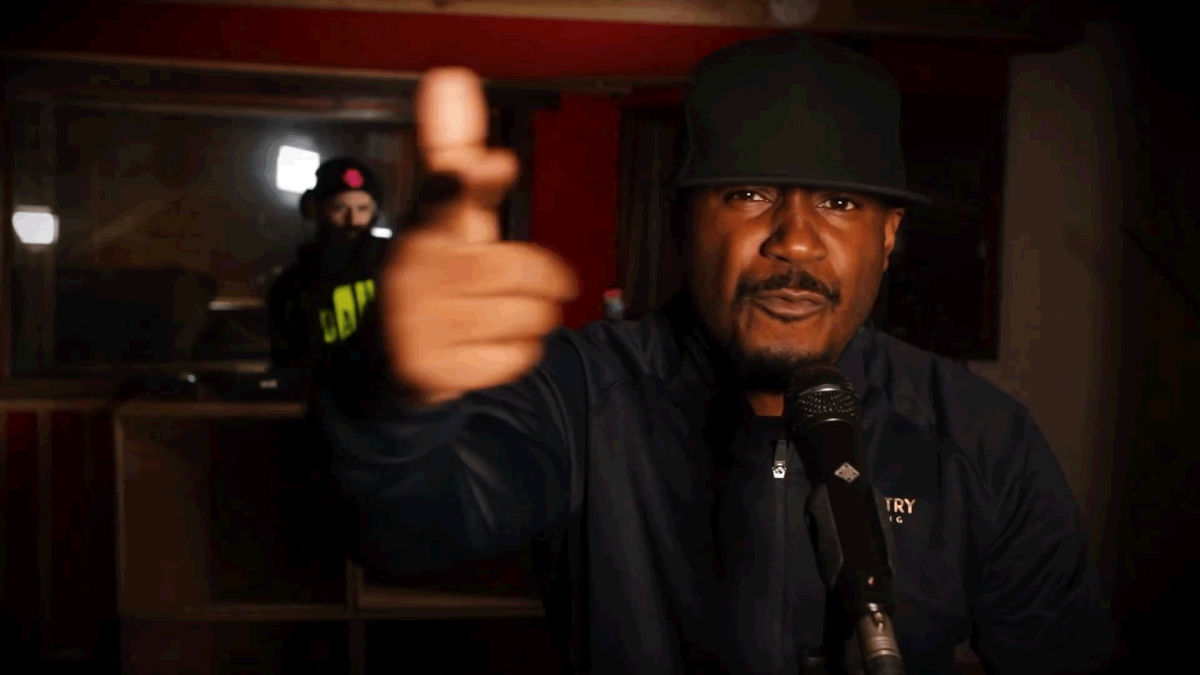
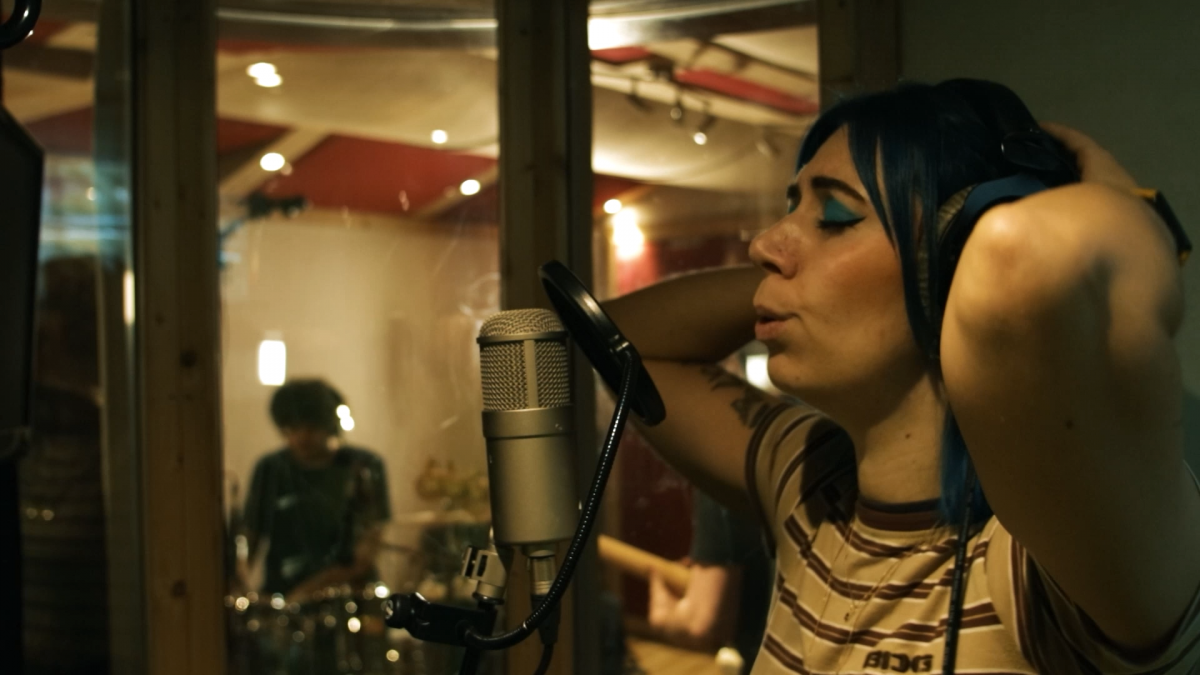
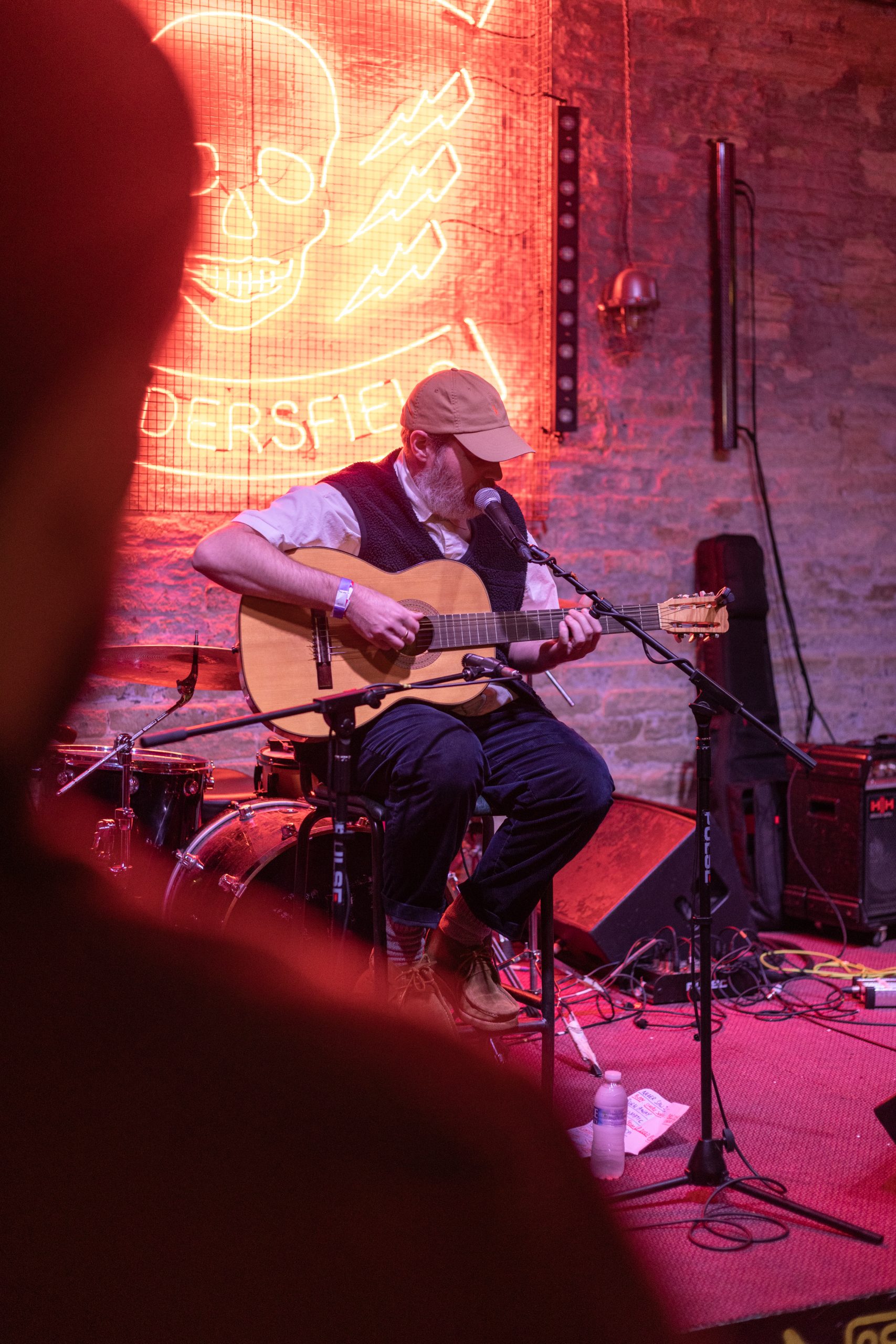
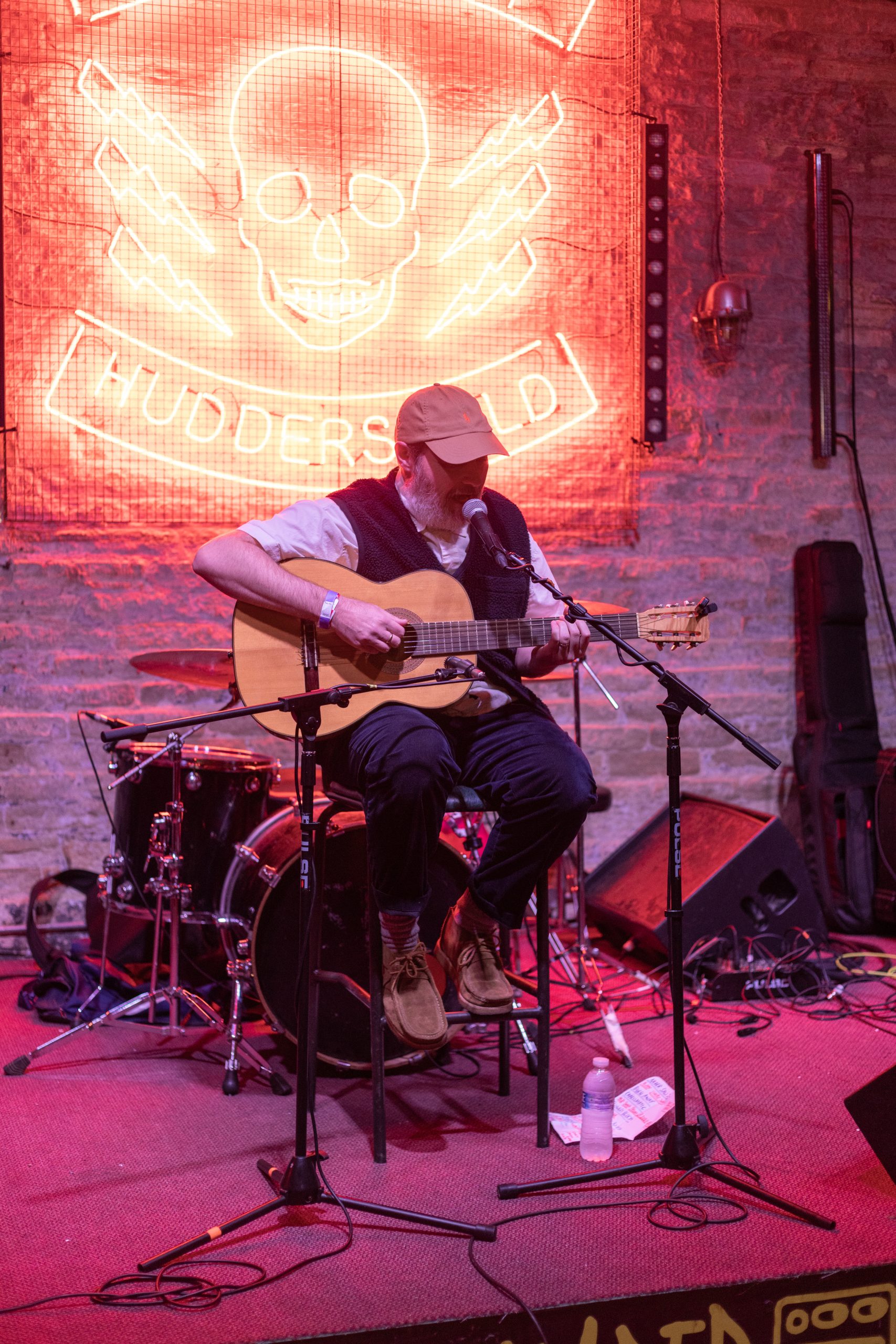
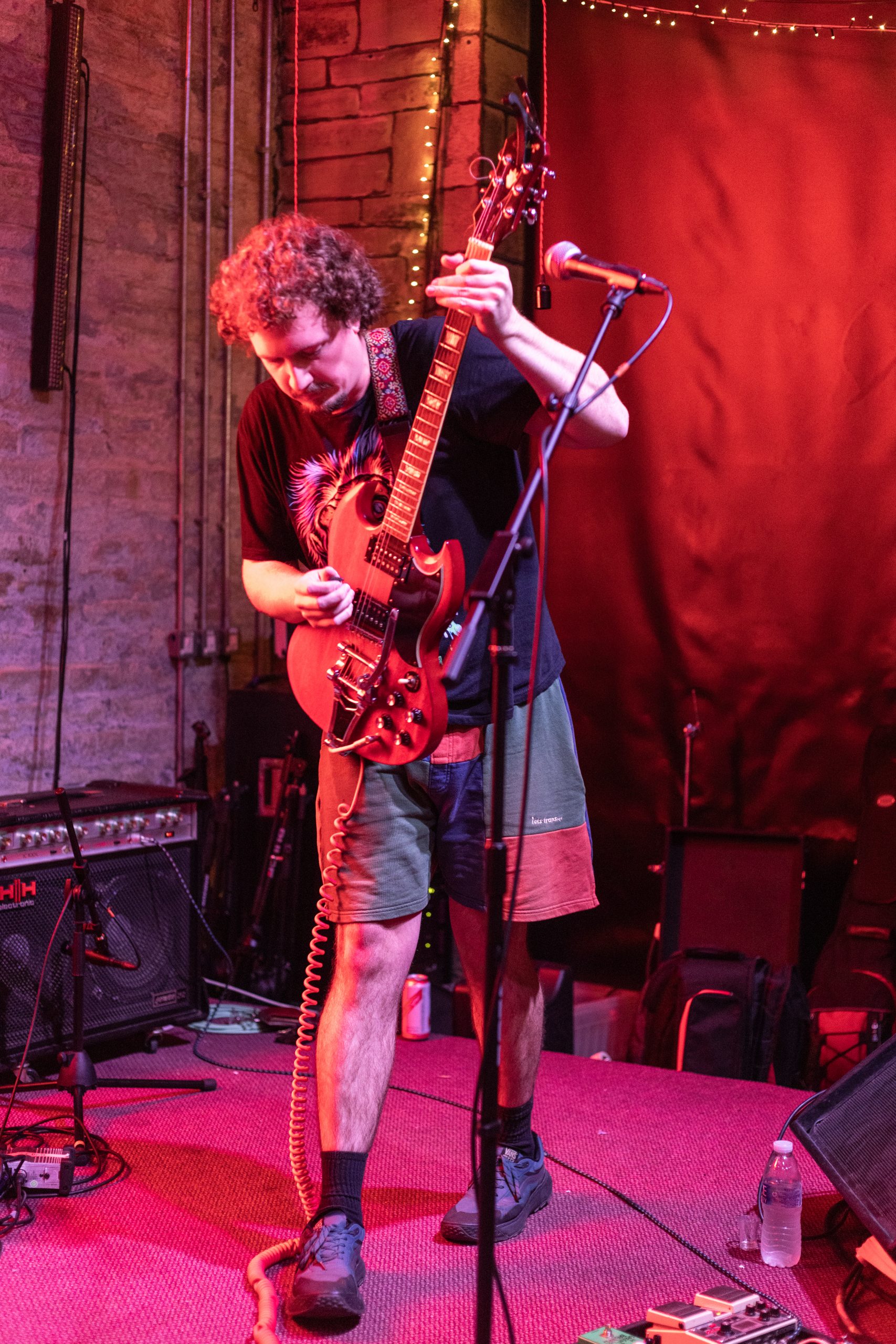
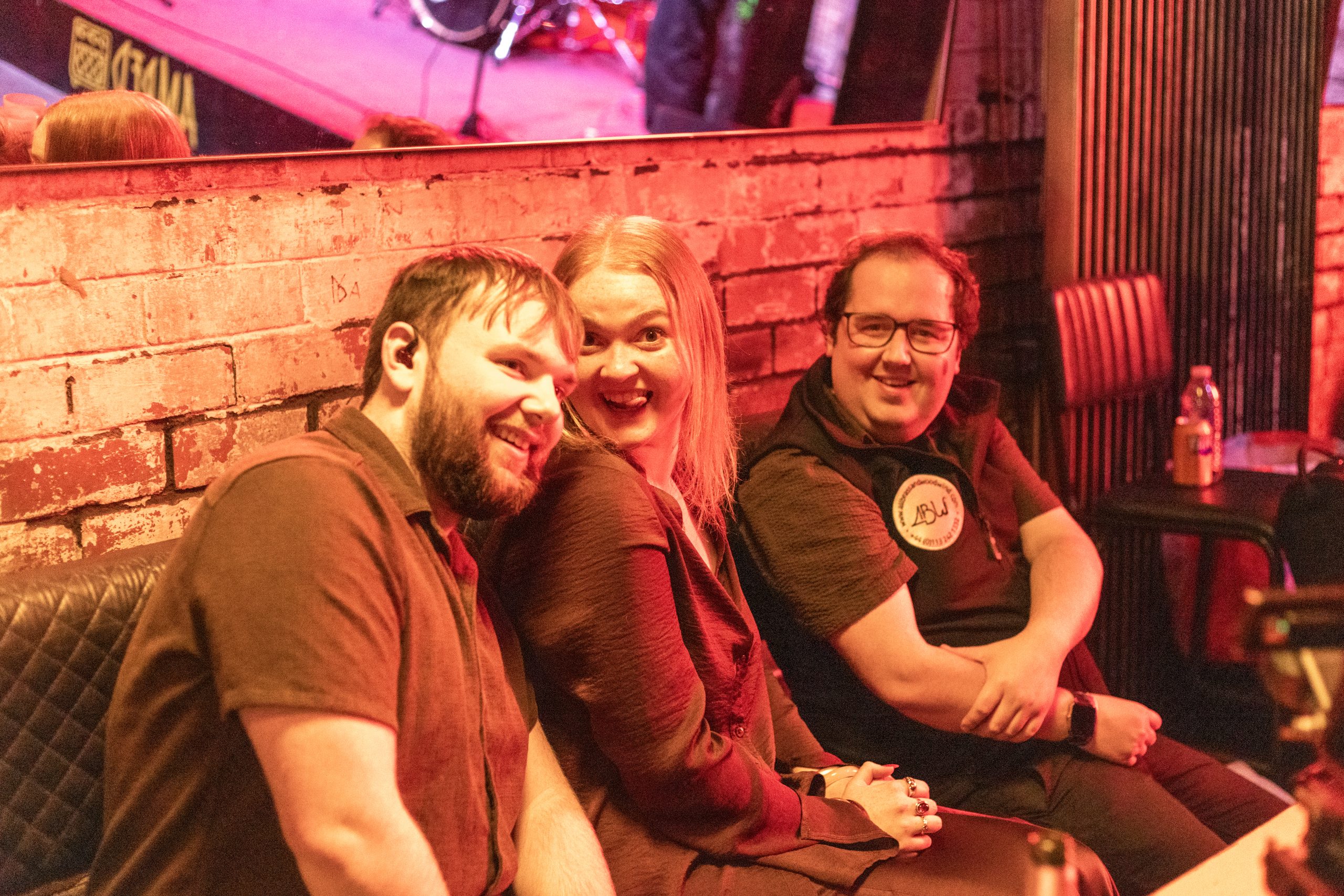
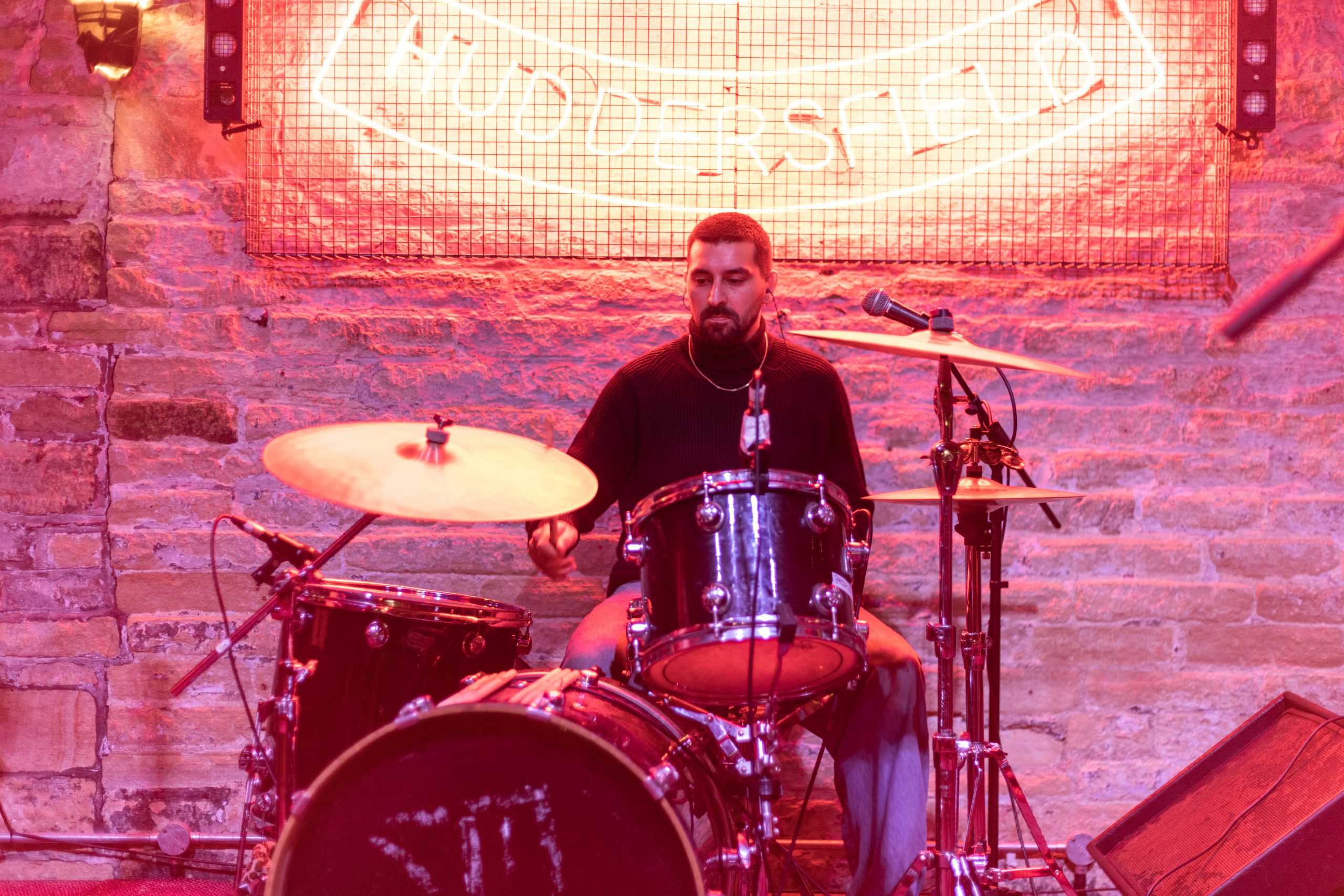
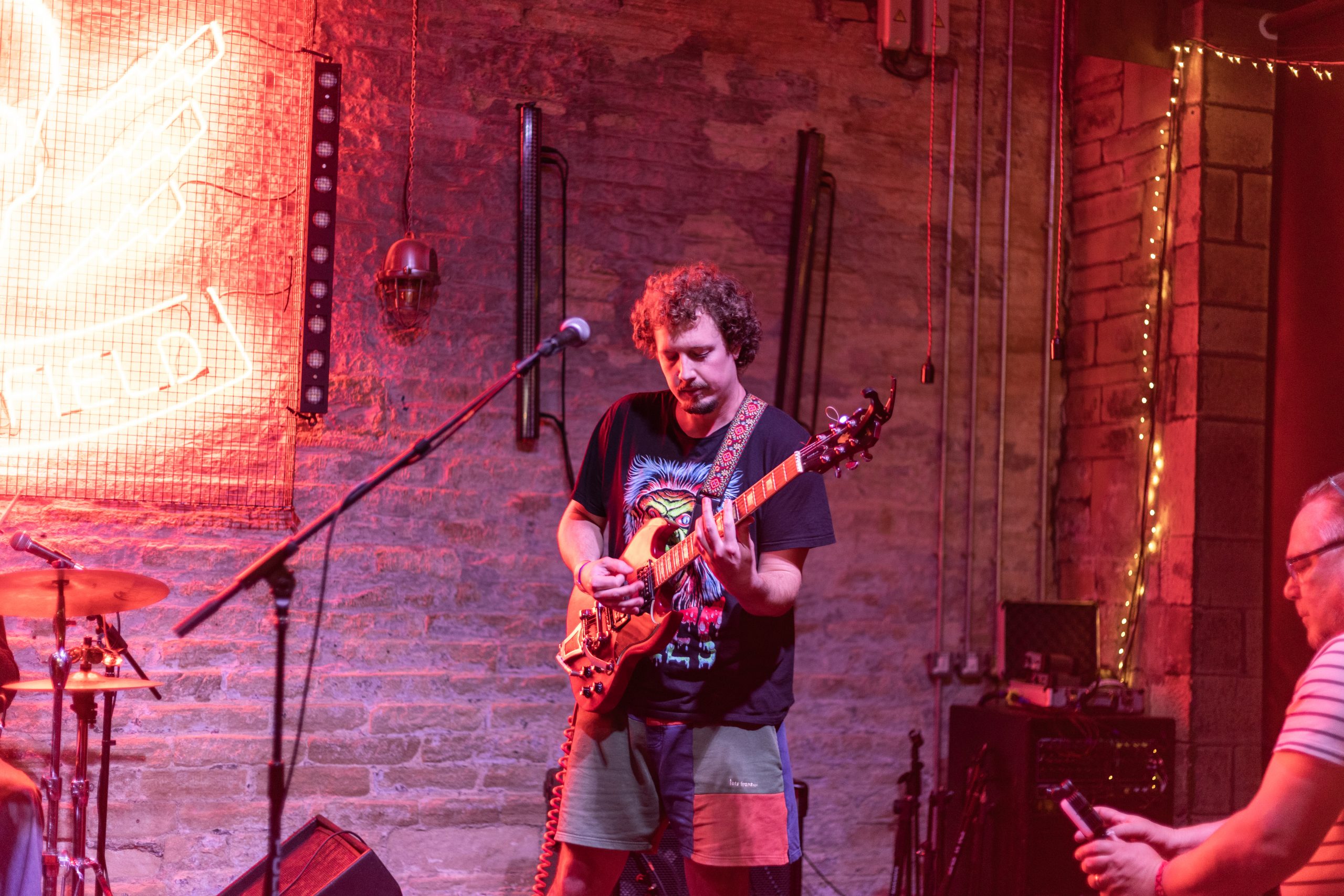
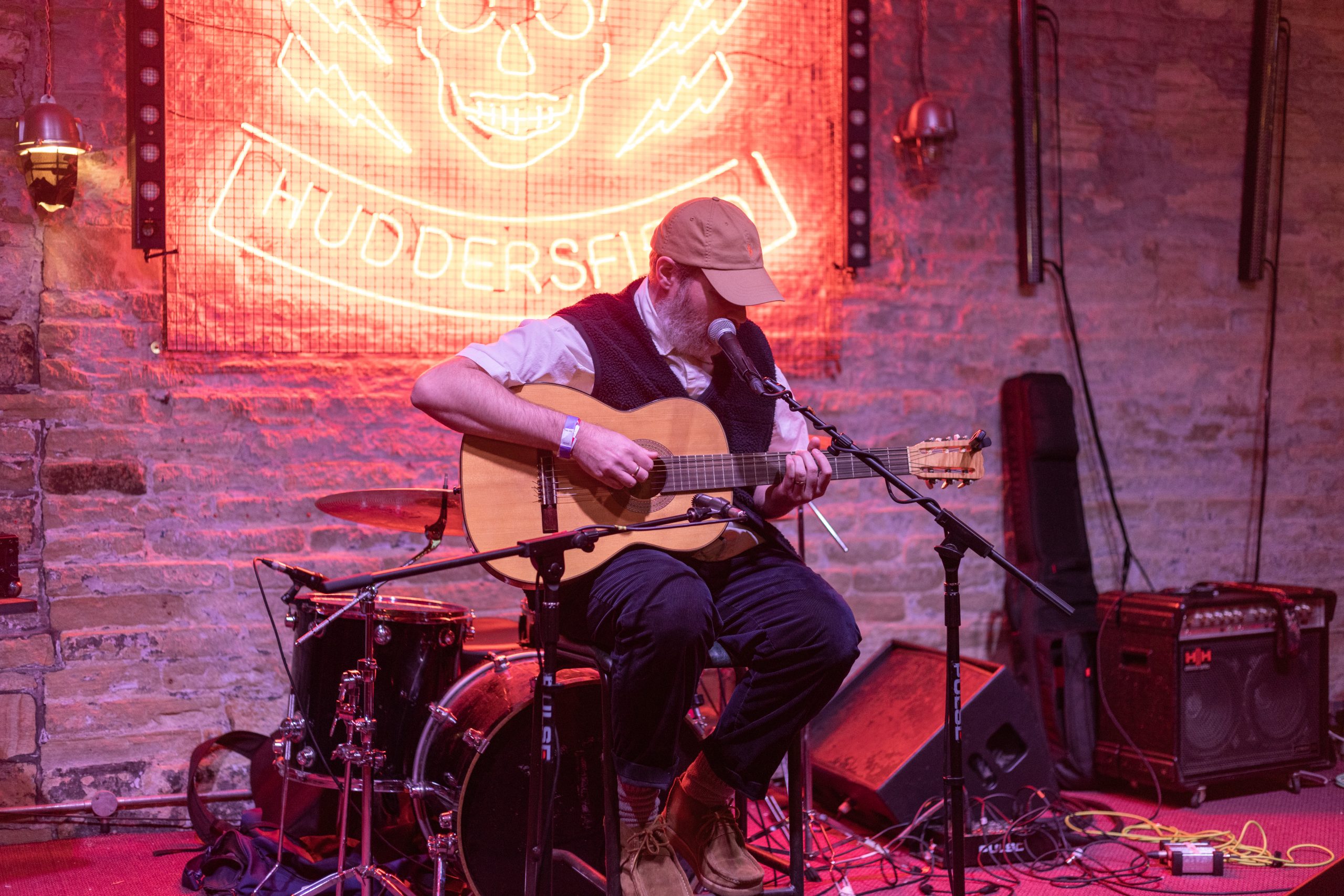
Seamlessly transitioning the day’s inspiration into a night of community and celebration, the party was curated by us, transforming the venue into a powerful showcase for local talent. Attendees were treated to a diverse and gripping line-up that kept the energy high well into the night. Highlights included the beautiful, honest songwriting of Good Good Blood, the alluring and soulful sounds of vocalist Hannah Rowe, and the complex, yet highly danceable, Psychedelic Rock fusion of Don Gonzo. The celebration reached its peak with Therealdemo, a staple of the West Yorkshire scene, spinning classic and new Funk, Soul, and Hip Hop that kept the floor moving.
Take a look at the Highlights from the event below;
More than just a concert, the afterparty was the perfect, vibrant finale—a powerful demonstration of the collective spirit of the Northern creative scene and a truly triumphant way to cap off Wilson’s Republic’s 10th-anniversary celebration.
Additionally take a look at the highlights from the day event at Bates Mill featuring six speakers from different creative disciplines, they delivered heard honest, inspiring and beautiful interpretations of the event theme ROUTES.
Missed WRXL? Don’t worry – we’ve got the soundtrack. A little gift from us to you.
If you couldn’t make it (or just want to relive the event), we’ve got an official WRXL playlist – featuring the incredible artists who brought the afterparty to life.
Plug in, press play and keep the WRXL energy going 🎧